Security | Threat Detection | Cyberattacks | DevSecOps | Compliance

The Efficiency Shift: How AI Turns Noise into Clarity

Artificial intelligence (AI) is everywhere in cybersecurity marketing. Real AI is not about detecting more. It is about making decisions faster and more precisely, so that humans can spend their time on what truly matters. Endpoint security efficiency is the ability to deliver maximum protection with minimum operational effort, turning noise into clarity and alerts into meaningful incidents. AI is the engine that makes this possible.
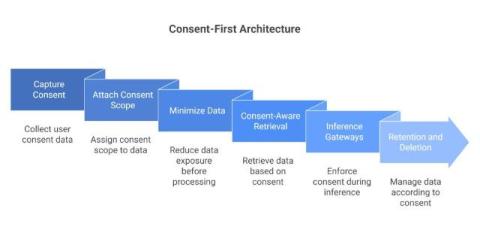
Why User Consent Is Revolutionizing LLM Privacy Practices

Ask most people what “consent” means and you’ll hear about a banner that asks to collect cookies. That was yesterday. Modern LLMs ingest emails, tickets, docs, chats, and logs. They create embeddings, reference snippets with retrieval, and sometimes fine-tune on past conversations. If you do not wire user consent into each of those steps, you either violate laws, lose user trust, or both. That is why user consent is revolutionizing LLM privacy practices.

8 Best AI Software Development Companies to Create Your Dream AI Product

Finding the right partner to build your AI product can feel like searching for a needle in a haystack. You need more than just developers who can write code. You need a team that understands machine learning architectures, knows how to train and deploy models at scale, and can navigate the complexities of data pipelines, model governance, and real-world AI implementation.

Why AI Security Monitoring Is Becoming Essential for Modern Enterprises

Enterprises today face growing challenges in keeping their workplaces safe. Traditional CCTV systems, while widely used, fall short because they only record events for later review. By the time an incident is noticed, the damage is often done. In fact, 60% of respondents fear their organizations are inadequately prepared to defend against AI-powered attacks, showing just how critical smarter security has become. AI-powered surveillance cameras change this approach.

The Evolving Role of AI Governance: Turning Risk into Responsibility

This article is part of a monthly LevelBlue series that explores the evolving world of AI governance, trust, and responsibility. Each month, we look at how organizations can use artificial intelligence safely, thoughtfully, and with lasting impact. Artificial intelligence has moved from being an experiment to becoming an expectation. It now shapes how decisions are made, how customers are supported, and how innovation happens. As AI grows in influence, so does the need to manage it wisely.

Shadow AI: From Hidden Threat to Organizational Challenge

This blog post is adapted from a recent episode of The Cloudcast podcast featuring Rohan Sathe, CEO and co-founder of Nightfall AI. Listen to the full conversation here. Your employees are uploading company documents to ChatGPT. Your healthcare teams are transcribing sensitive call recordings and feeding them into LLMs. Your finance department is pasting confidential spreadsheets into publicly accessible AI tools. And unless you have visibility into these workflows, you have no idea it's happening.

How AI Companies Can Use Data Lineage To Stop IP Theft - And Win When It Goes To Court

The 21st-century gold rush is the AI boom, and it is producing a wave of emerging AI companies. Being the first to build and apply AI in novel ways successfully is the difference between success and failure. Because of this, companies can find themselves making a trade-off between time-to-market and security.

Considerations for Microsoft Copilot Studio vs. Foundry in Financial Services

Financial services organizations are increasingly turning to AI agents to drive productivity, automate workflows, and deliver an innovative edge. Within the Microsoft ecosystem, two agentic platforms, Copilot Studio and Foundry, are paving new paths for agent development and deployment. Despite their shared vision for enterprise AI, their differences have important implications for user groups, agent capabilities, and security priorities.