Security | Threat Detection | Cyberattacks | DevSecOps | Compliance

How To Combat AI-Enhanced Social Engineering Attacks

Artificial intelligence (AI) has supercharged social engineering. Global management consulting firm McKinsey & Company reported a 1,200% global surge in phishing attacks since the rise of generative AI in the latter half of 2022. And it’s not just the number of attacks that’s climbing; it’s also the success rate. Arctic Wolf’s Human Risk Behavior Snapshot: 2nd Edition reveals that nearly two-thirds of IT and security leaders self-reported falling for a phishing attempt.
Find the Invisible: Salt MCP Finder Technology for Proactive MCP Discovery

The conversation about AI security has shifted. For the past year, the focus has been on the model itself: poisoning data, prompt injection, and protecting intellectual property. These are critical concerns, but they miss the bigger picture of how AI is actually being operationalized in the enterprise. We are entering the era of Agentic AI. AI is no longer just generating text; it is taking action. Autonomous agents read customer tickets, query databases, update financial records, and trigger workflows.

Simplifying credential security on ChatGPT Atlas

AI-powered browsers are transforming how people use the internet. They help you move faster, automate tasks, and simplify how you operate on the web. As this innovation continues, 1Password is committed to meeting our customers wherever they are in their AI journey. That means giving you the confidence to explore new AI tools, without sacrificing the security, privacy, or ease of use you depend on. And today, that includes OpenAI’s new ChatGPT Atlas browser.

Nicole Perlroth & Garrett Hamilton at UCI - How AI Changes the Security Operating Model

Moderated by Nicole Perlroth, this session at UC Irvine’s Digital Leadership Agenda 2026 surfaces a foundational reality in cybersecurity: Most organizations lack a clear, empirical understanding of how their security is actually deployed. Our Co-founder & CEO Garrett Hamilton outlines: Why proactive security remains difficult — because accuracy depends on conversations, assumptions, and fragmented knowledge across IT and security teams.

How Can Digital Strategies Support Patient Retention in Healthcare?

Picture this: your team works hard to bring in new patients, but many never return for a second visit. They slip through the cracks, and you only feel the loss when revenue starts to dip. The truth is, keeping patients is often easier and cheaper than finding new ones-you've already done half the work. The challenge is staying connected in a way that feels natural, not pushy. The good news? A few smart digital tools can help you keep patients engaged, informed, and coming back, all without adding more work to your staff's day.

The Efficiency Shift: How AI Turns Noise into Clarity

Artificial intelligence (AI) is everywhere in cybersecurity marketing. Real AI is not about detecting more. It is about making decisions faster and more precisely, so that humans can spend their time on what truly matters. Endpoint security efficiency is the ability to deliver maximum protection with minimum operational effort, turning noise into clarity and alerts into meaningful incidents. AI is the engine that makes this possible.

Why User Consent Is Revolutionizing LLM Privacy Practices

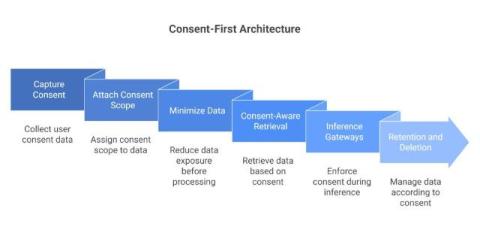
Ask most people what “consent” means and you’ll hear about a banner that asks to collect cookies. That was yesterday. Modern LLMs ingest emails, tickets, docs, chats, and logs. They create embeddings, reference snippets with retrieval, and sometimes fine-tune on past conversations. If you do not wire user consent into each of those steps, you either violate laws, lose user trust, or both. That is why user consent is revolutionizing LLM privacy practices.

Platformization in Security: Why "One Platform to Rule Them All" Doesn't Exist

One platform to rule them all? Not quite. As Jay Wilson puts it, security stacks behave like a rubber band — always stretching between broad platforms and best-of-breed tools. No enterprise runs on a single vendor. But no one survives seventy, either. The real objective is coherence: a custom platform built from what your business already owns. That’s where Reach fits. ⇢ Unifies disparate controls into one operational view⇢ Bridges gaps as stacks expand or contract⇢ Turns your actual environment into a cohesive, measurable platform.