Security | Threat Detection | Cyberattacks | DevSecOps | Compliance

PII Detection in Unstructured Text: Why Regex Fails (And What Works)

Let’s look at something many teams quietly struggle with. Detecting PII inside unstructured text. It feels like it should be simple. After all, we’ve used regular expressions for years to find emails, phone numbers, and ID formats. Yet when we deploy regex in real environments. ticket systems, chat logs, CRM notes, uploaded documents, support transcripts. something becomes clear very quickly. Regex isn’t enough.


Adversarial AI: The New Symmetric Threat Landscape

Adversarial AI is geometrically making cyber a symmetric threat, fundamentally altering the cybersecurity equation. However, there are leaders who have successfully navigated these emerging challenges and understand the implications. Join Dr. Aleksandr Yampolskiy (CEO & Co-Founder, SecurityScorecard) and Dr. Srinivas Mukkamala (CEO, Securin Inc.) as they dive into: SecurityScorecard monitors and scores over 12 million companies worldwide.

The problem? The people you're blocking are often top performers.

Banning AI seems logical. Our new report shows why it's failing. The problem? The people you're blocking are often top performers. They're confident, innovative, and willing to work around the rules to get value. This video explains why this paradox changes everything. You can't just block curiosity. You have to harness it. Download the complete (ungated) report.

Data Leakage: AI's Plumbing Problem

Sensitive information disclosure ranks on the OWASP Top 10 for LLM Applications, and for good reason. When AI-powered applications inadvertently expose private data like personally identifiable information (PII), financial records, health information, API keys, or proprietary business intelligence, the consequences cascade quickly: regulatory violations, competitive disadvantage, and shattered user trust.

Mitigating Credential Phishing in the Age of AI and Cloud Convergence

Phishing remains one of the most effective methods for stealing credentials and breaching enterprise environments. Despite advanced email and browser protections, attackers now leverage AI, and automation to outpace traditional defenses. The Verizon 2024 Data Breach Investigations Report found that 68% of breaches involve the human element, often triggered within seconds of a phishing lure, just 21 seconds to click and 28 seconds to submit credentials.

AI, Creators & Agentic Commerce - A Conversation with Cloudflare CSO Stephanie Cohen

In this episode of This Week in NET, host João Tomé sits down with Stephanie Cohen, Cloudflare’s Chief Strategy Officer, for a candid conversation about AI, content creators, financial services, partnerships, and the future of the Internet. Stephanie shares how Cloudflare is helping keep the Internet open and resilient — from giving creators transparency and control over AI scraping, to enabling new models of agentic commerce through partnerships with Visa and Mastercard, to empowering organizations of all sizes through Cloudflare’s global network.

The OWASP Top 10 for Agentic Applications: A Milestone for the Future of AI Security

The OWASP GenAI Security Project has officially released its Top 10 for Agentic Applications, the first industry-standard framework focused on the operational risks created by autonomous and semi-autonomous AI systems. AI has evolved in a way that directly changes how enterprises need to think about security. We started with machine learning systems designed to classify and predict.

OWASP Top 10 for Agentic Applications (2026): What Developers and Security Teams Need to Know

Agentic AI is moving into production in CI/CD pipelines, internal copilots, customer support workflows, and infrastructure automation. These systems no longer just call a model. They plan, decide, delegate, and take actions on behalf of users and other systems. This creates new attack surfaces that do not map cleanly to traditional application security or even the OWASP Top 10 2025.

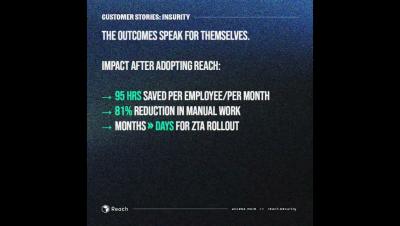
How Insurity Cut Manual Security Work by 81%

95 hours back. Every. Single. Month. One of the many outcomes from our ZTA journey with Insurity. They didn’t just deploy Zero Trust — they operationalized it. Reach unified controls, automated remediation, and eliminated the manual effort slowing progress. Results:︎ 81% less manual work︎ 95 hours saved per employee per month︎ Months → days for rollout︎ Zero Trust that sticks.