Security | Threat Detection | Cyberattacks | DevSecOps | Compliance

Claude Moves to the Darkside: What a Rogue Coding Agent Could Do Inside Your Org

On November 13, 2025, Anthropic disclosed the first known case of an AI agent orchestrating a broad-scale cyberattack with minimal human input. The Chinese state-sponsored threat actor GTG-1002 weaponized Claude Code to carry out over 80% of a sophisticated cyber espionage campaign autonomously. This included reconnaissance, exploitation, credential harvesting, and data exfiltration across more than 30 major organizations worldwide. The impact was real. And the AI was in control.

Microsoft E3/E5 Security Optimization | Reach Demo

Microsoft's E3 and E5 security tools offer powerful defensive capabilities, but without proper configuration, critical protections can be overlooked. Reach identifies misconfigurations and underutilized capabilities across your Microsoft security stack, then deploys fixes to optimize your tooling, eliminate exposures, and reduce risk. Learn more at reach.security.

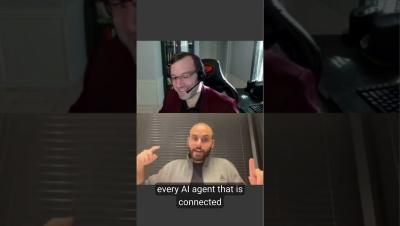
Building human-centric SOCs in the age of AI automation with Alec Fenton

Defender Fridays - Building human-centric SOCs in the age of AI automation with Alec Fenton Join us for this week's Defender Fridays as we explore the evolution of security operations and AI's role in empowering analysts with Alec Fenton, VP Security Operations at Foresite Cybersecurity. At Defender Fridays, we delve into the dynamic world of information security, exploring its defensive side with seasoned professionals from across the industry. Our aim is simple yet ambitious: to foster a collaborative space where ideas flow freely, experiences are shared, and knowledge expands.

How AI is reshaping identity governance for CISOs and CIOs

2025 has been a defining year for identity security, marked by a rapid increase in the volume, variety, and velocity of identities that organizations must now govern. The changes have been building for a long time, as identity tools have evolved from early single sign-on solutions and compliance-driven governance to the cloud-first, AI-powered world we live in now, which must enable employees with the access they need at lightning speed while maintaining security.

Why AI's Real Value in Security Isn't What You Think

Security is entering a phase where operationalization becomes the true competitive edge. Garrett puts it plainly—much of AI’s usefulness right now comes from supporting the repetitive, high-volume operational work, and that is likely here to stay. Sebastian and John point to the same pressure: more sensors, more platforms, more enforcement points… yet the real bottleneck is how teams turn those capabilities into daily practice.

WAN AI vs Other AI Video Generators: Which Is Best?

In the world of artificial intelligence (AI) technology, video generators have become increasingly popular for creating stunning visual content. One of the most talked-about AI art generators is WAN AI, which promises to revolutionize the way we create and share videos. But how does WAN AI stack up against other AI video generators on the market? Let's take a closer look at the features, capabilities, and benefits of WAN AI compared to its competitors.
Featured Post

Cyber Resilience and AI Risk: Safeguarding the UK's Critical Infrastructure in a New Threat Landscape

In October, the UK put a spotlight on cyber resilience with the release of the NCSC's 2025 Annual Review. CEO Richard Horne warned that failing to prepare for cyberattacks risks a company's future. The urgency behind this statement is backed by data: the NCSC handled 204 major cyber incidents between September 2024 and 2025, and 43% of UK businesses reported a breach in the past year.

Adopting cold-war tactics for AI deep fakes?

The AI arms race in deepfake detection has a critical problem: the technology can't keep up. In this episode, Navroop Mitter, CEO of ArmorText, discusses why the industry is shifting away from relying on AI detection alone. A recent study from SKKU in South Korea found that zero out of sixteen top deepfake detection technologies could reliably identify deepfakes in real-world conditions. They worked fine in controlled lab settings, but failed when it mattered most.