Security | Threat Detection | Cyberattacks | DevSecOps | Compliance

Security Alert: CVE-2025-66478 & CVE-2025-55182 (React2Shell) - Next.js React Server Components Remote Code Execution

A critical vulnerability, CVE-2025-66478, has been identified in Next.js applications using React Server Components (RSC) with the App Router. This vulnerability receives a CVSS score of 10.0 and a Bitsight Dynamic Vulnerability Exploit (DVE) score of 7.85. This vulnerability may allow remote code execution (RCE) when affected servers process attacker-controlled RSC requests. CVE-2025-66478 is tied to an upstream React issue (CVE-2025-55182–DVE score 9.15) affecting the RSC protocol implementation.

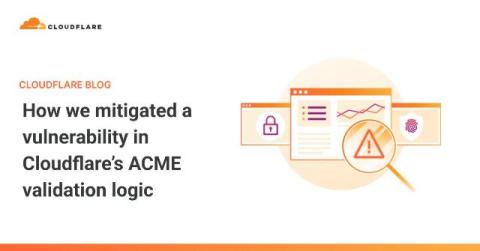
Cloudflare WAF proactively protects against React vulnerability

Cloudflare has deployed a new protection to address a vulnerability in React Server Components (RSC). All Cloudflare customers are automatically protected, including those on free and paid plans, as long as their React application traffic is proxied through the Cloudflare Web Application Firewall (WAF). Cloudflare Workers are inherently immune to this exploit. React-based applications and frameworks deployed on Workers are not affected by this vulnerability.

Security Advisory: Critical RCE Vulnerabilities in React Server Components & Next.js (CVE-2025-55182 / CVE-2025-66478)

On December 3, 2025, coordinated disclosures revealed that multiple releases of React 19 and Next.js contain a critical flaw in the React Server Components (RSC) “Flight” protocol, allowing unauthenticated remote code execution (RCE). The vulnerability originates from unsafe deserialization of attacker-controlled data in server-side RSC payload handling.

PyTorch Users at Risk: Unveiling 3 Zero-Day PickleScan Vulnerabilities

JFrog Security Research found 3 zero-day critical vulnerabilities in PickleScan, which would allow attackers to bypass the most popular Pickle model scanning tool. PickleScan is a widely used, industry-standard tool for scanning ML models and ensuring they contain no malicious content.

Defining and Defending Against a Zero Day Attack

Unexpected attacks are the hardest to fend off. In the realm of cyber, Zero Day vulnerabilities are among the greatest risks, as these software flaws are unknown and exploited before a fix is available, potentially compromising the thousands of organizations that are unwittingly using vulnerable software.

CVE-2025-54057: Stored XSS Vulnerability in Apache SkyWalking Exposes Monitoring Dashboards to Attackers

Apache SkyWalking is one of the most widely adopted open-source Application Performance Monitoring (APM) and observability platforms, trusted by developers and DevOps teams to visualize telemetry, trace distributed systems, and ensure application uptime. However, a recently disclosed vulnerability has revealed that the very dashboards designed to improve visibility could be turned into attack vectors.

Defining and Defending Against a Zero Day Attack

Unexpected attacks are the hardest to fend off. In the realm of cyber, Zero Day vulnerabilities are among the greatest risks, as these software flaws are unknown and exploited before a fix is available, potentially compromising the thousands of organizations that are unwittingly using vulnerable software.

Best 5 Platforms to Help Eliminate CVEs from Container Images

The rapid adoption of containerized applications has reshaped software development and deployment across industries. Containers allow teams to deliver updates faster, scale efficiently, and manage dependencies with precision. However, this flexibility comes with a critical challenge: vulnerabilities hidden inside container images.