Security | Threat Detection | Cyberattacks | DevSecOps | Compliance

The Next Level of Managed Vulnerability Scanning: Authenticated and Unauthenticated Scans

Trustwave, A LevelBlue Company, is a huge proponent of employing offensive security tactics to ensure a client is properly protected. For Trustwave, the reason is obvious. Offensive security is an effective approach to evaluate and enhance an overall security posture. We’ve written about this before (just check here, here, and here), but today we will explore the difference between an Authenticated Scan and an Unauthenticated Scan. Let’s set the stage by defining the two types of scans.

The Surprising Truth About GPT-5 in Cursor's Agent Mode

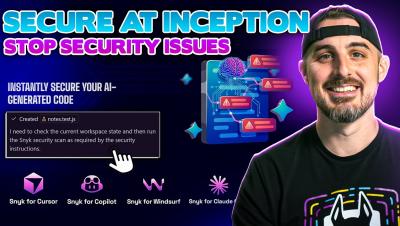
In this video, I test out GPT-5 by asking it to build a simple and secure Node.js notes app that lets users create, read, update, and delete notes. I run two experiments — one without a security MCP server and one with it — to see how well the new model handles both functionality and security.

CVE-2025-54253: Zero-Day Vulnerability in Adobe Experience Manager Forms

A critical zero-day (CVSS 10.0) in Adobe Experience Manager (AEM) Forms JEE 6.5.23.0 and earlier allows authentication bypass and remote code execution (RCE). AppTrana delivers immediate Day 0 protection with: Virtual patching before vendor fixes Continuous monitoring of exploit attempts 24×7 security team ensuring zero downtime With a public PoC already available, the risk is high. Apply the patch ASAP or protect instantly with AppTrana WAAP.

GitGuardian Remediation Guide - From Alert to Resolution

In this video, Dwayne McDaniel, Developer Advocate at GitGuardian, walks you through the workflow security and DevOps teams can follow to investigate and remediate a secret leak using the GitGuardian platform. Whether it’s an exposed API key, token, or internal credential, GitGuardian helps you go from alert to resolution with confidence.

Exploiting API4 - 8 Real-World Unrestricted Resource Consumption Attack Scenarios (and How to Stop Them)

Unrestricted Resource Consumption (API4:2023) is the only threat category in the OWASP API Security Top 10 explicitly dedicated to Denial of Service (DoS) and resource abuse. But despite being just one category, attackers can exploit it in many different ways; from large file uploads and expensive GraphQL queries to abuse of metered third-party services like SMS gateways or AI/LLM APIs.