Security | Threat Detection | Cyberattacks | DevSecOps | Compliance

Proactive WAF Vulnerability Protection & Firewall for AI + Multiplayer Chess Demo in ChatGPT

In this episode of This Week in NET, we talk with Daniele Molteni, Director of Product Management for Cloudflare’s WAF, about how Cloudflare responded within hours to a newly disclosed React Server Components vulnerability — deploying global protection before the public advisory was even released.

LevelBlue and Tenable Introduce Unlimited Enterprise-Grade Vulnerability Scanning in USM Platform at No Additional Cost

LevelBlue is redefining what clients and partners can expect from a managed security provider. Through a new partnership with Tenable, a world-class leader in vulnerability management, LevelBlue is introducing unlimited, enterprise-grade vulnerability scanning for all clients and partners using the LevelBlue USM platform — included at no additional cost.

Mastering OWASP Detection: Enterprise Rules for AWS, Akamai, F5, and Cloudflare

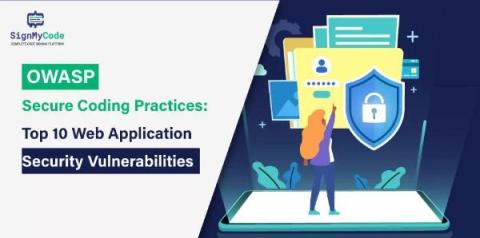
Application Security, WAF, and OWASP form an interconnected defense strategy for web applications. OWASP (Open Web Application Security Project) provides the framework for identifying critical vulnerabilities through resources like the OWASP Top 10, while WAFs act as the protective layer that detects and blocks attacks targeting these vulnerabilities in real-time.

How to detect React2Shell attacks using network-based threat hunting

How do you find React2Shell vulnerabilities or detect React2Shell attacks in real environments? In this video, Corelight cloud security researcher David Burkett walks through how to threat hunt React2Shell by focusing on post-exploitation behavior at the network level. Instead of relying on exploit signatures, the approach uses application baselining and network traffic analysis to identify abnormal behavior.

Old AI Security vs Evo: Watch Agentic Security Replace Weeks of Manual Work

From intelligent chatbots to autonomous agents, innovation has never moved faster thanks to GenAI. But with the rate of velocity comes a massive new challenge: a class of complex, non-deterministic security risks that traditional cybersecurity methods are simply not equipped to handle. AI-native applications are already running in production. Across industries, teams are deploying copilots, RAG systems, autonomous agents, and AI-powered workflows faster than traditional security processes can keep up.

Understanding React2Shell: Critical Remote Code Execution in React Server Components and Next.js

React2Shell is the name commonly used to describe a set of critical vulnerabilities affecting React Server Components (RSC) and frameworks that rely on them, including Next.js. Since disclosure, security teams have observed continued exploitation attempts targeting exposed applications, with attackers abusing the vulnerability to gain unauthorized code execution on affected servers.

Kenna Lit the Spark on the Exposure Management Fire and It's Time for the Next Generation

When Kenna launched more than a decade ago, it reshaped an industry that had grown numb to vulnerability overload. Back then, vulnerability management meant looking at mountains of CSV files, scanner reports, and a never-ending backlog of unprioritized issues. Kenna introduced the idea that risk instead of raw counts should determine what gets fixed first. For many security teams, it was the first time they realized they didn’t have a vulnerability problem.

Arctic Wolf Observes Malicious SSO Logins on FortiGate Devices Following Disclosure of CVE-2025-59718 and CVE-2025-59719

In December 12, 2025, Arctic Wolf began observing intrusions involving malicious SSO logins on FortiGate appliances. Fortinet had previously released an advisory for two critical authentication bypass vulnerabilities (CVE-2025-59718 and CVE-2025-59719) on December 9, 2025. Arctic Wolf had also sent out a security bulletin for the vulnerabilities shortly thereafter.

OWASP Top 10 for Agentic Applications 2026: Key Takeaways & How to Take Action

AI agents connect to APIs, execute code, move data, and make decisions with real permissions in live production environments — introducing a new class of security risks. To help organizations stay ahead, the OWASP GenAI Security Project released the OWASP Top 10 for Agentic Applications 2026. In this post, we’ll provide a summary of each agentic AI risk category defined by OWASP, along with actionable next steps to begin securing your agentic AI projects in 2026 and beyond.