Mailchimp
Not subscribed to OpsMatters Newsletter


Managing the demands of a distributed workforce — especially across multiple time zones and countries — is difficult in the best of times. Now, in the time of the Coronavirus, security leaders are being asked to manage new productivity tools at unprecedented speeds while keeping data security top of mind. As more companies add Slack to their communications and productivity stacks, security policies are being tested in new ways.
Dashboards are an integral part of a SIEM solution as they help you in visualizing the security of your organization’s technical infrastructure in real-time. In our last article, we discussed in detail about the pre-configured dashboards on Logsign SIEM and the information they present for your security team. From threat intelligence to identity management, what types of dashboards are available under each category.
So far in our blog series, we have discovered that there is a high understanding of the threats that bots cause across all industries. We recently carried out a survey of 200 UK enterprises across e-Commerce, financial services, entertainment and travel. In part three of our blog series, we discussed how bots are affecting different industries. There is very little need to explain to businesses that bots can be a problem.
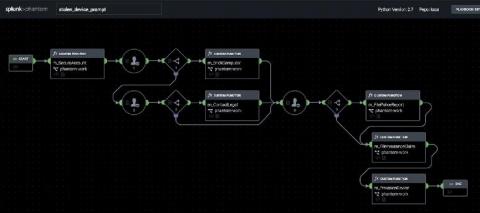
Splunk Phantom is a security orchestration, automation and response (SOAR) technology that lets customers automate repetitive security tasks, accelerate alert triage, and improve SOC efficiency. Case management features are also built into Phantom, including “workbooks,” that allow you to codify your security standard operating procedures into reusable templates.
Security configuration management (SCM) can help organizations do much more than just harden their attack surfaces against intrusions. This fundamental control also has the ability to make your audits flow more smoothly. Indeed, it allows organizations to pull reports from any point in time and demonstrate how their configuration changes and alignments help to support their compliance efforts.
The ongoing cybercrime epidemic has triggered a cybersecurity calls to arms, as organizations around the world are looking for some 3.5 million skilled workers to help fight a $6 trillion problem. One of the cool features of the University of San Diego’s comprehensive new Cybersecurity Jobs Report is a shareable graphic that spotlights the cybercrime epidemic, the ongoing shortage of skilled cybersecurity professionals and the need for talent at the top companies across all industries.
It was the day before a holiday break, and everyone was excited to have a few days off to spend with friends and family. A skeleton crew was managing the security operations center, and it seemed as though every other team left early to beat the holiday traffic. Every team other than the vulnerability management (VM) team that is. Just before it was time to leave for the day, and the holiday break, the phone rang.