Mailchimp
Not subscribed to OpsMatters Newsletter


If you’re a Java developer that wants to develop your applications more securely, you’ve come to the right place. Snyk can help you with that mission. This article will explain how to begin with Snyk for secure Java development so you can be more secure from the get-go. If you’re new to Snyk, it’s important to know that we offer a variety of developer-focused products and tools. Some of these tools, like our CLI and some IDE integration, support multiple products.
One of the most common misconceptions about cybersecurity is that the responsibility and ownership sits solely on the shoulders of the CISO and the security team. Common assumptions are anything related to cybersecurity, a security issue or security initiative resides with the security team and the Chief Information Security Officer (CISO). Phishing attacks? That’s a problem for the security department. Vetting vendors and third parties? That belongs to the vendor management team.
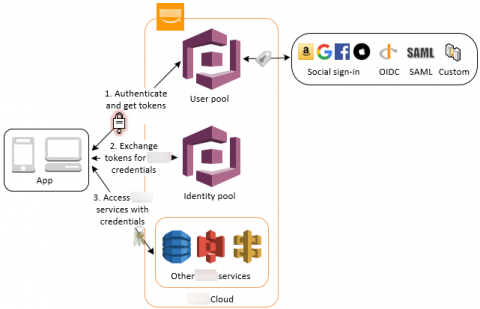
We talked about IAM in the past 3 posts, identities in IAM, manage users privilege as an IT person and control privilege boundaries. We also talked about how applications use AWS Cognito Identity Pool to get AWS temporary credentials to access AWS resources in early posts of “What I wish I could have learned before starting using AWS Cognito” and “Authentication and authorization with AWS Amplify under the hood”.
In the beginning of May, a U.S. pipeline company suffered a ransomware attack. The company decided to respond by halting operations while it investigated the incident. This delayed tens of millions of gallons of fuel from reaching their destination all along the East Coast. Less than a week later, Bloomberg reported that the company had paid millions of dollars to a ransomware group in order to regain access to their systems. U.S.
To ensure Outpost24 stays at the forefront of cybersecurity technology we conduct regular research into new innovations, and LEXIS High Performance Computing (HPC) is one of them. Outpost24 was instrumental in contributing and providing the “Security-By-Design” and “Zero-Trust” principles to creating the secure LEXIS Cloud-HPC-Big Data platform, and in this blog we explore the zero-trust fundamentals for which the LEXIS portal has been designed.
In this post, I’ll answer one question: Have we reached the tipping point for cloud proliferation? According to the report, the answer is yes. ESG surveyed 500 IT and security professionals working in the security operations center (SOC) chain of command at organizations with more than 1,000 employees in North America and Western Europe in Q1 of this year.
For years, security practitioners have kicked and screamed about their reality. There are too many alerts to fully investigate and manually resolve every day. There is a massive talent shortage of qualified security professionals across the globe. Then couple that with analyst burnout and siloed security point-products. All of these factors are preventing security operation centers (SOCs) from operating at their full potential, with increased efficiency, performance and speed.