Security | Threat Detection | Cyberattacks | DevSecOps | Compliance

Latest posts

Security-First: Why It's Right and What It Means

Most businesses today understand that cybersecurity should be a central part of their operations. Still, more often than not, professionals view security as an extra feature, something to add on after settling everything else. This has been the predominant approach for years, and it’s part of why so many companies find themselves vulnerable. Rising cybercrime has made the need for change increasingly evident, and many companies are responding.

Product Demo

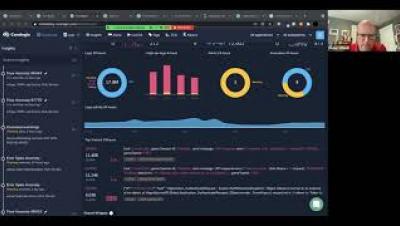
This 45-minute product demo provides a demonstration of how Coralogix is disrupting the application monitoring and observability market with our game-changing technology. We're working to redefine the way organizations approach logging in their modern DevOps and CI/CD environments. We are increasing developer productivity (less time searching the logs, more time developing), and saving companies upwards of 60% on the overall cost of data volume storage (due to our underlining architecture).

SecurityScorecard: Advancing 3rd Party Risk Management with SecurityScorecard

Join us and learn how we can help you scale and optimize TPRM with 198% ROI according to The Forrester Consulting Total Economic Impact™ of SecurityScorecard study. You'll learn how we provide the most comprehensive and accurate ratings on third-party risk, automate the management of your security ecosystem, and deliver reports that drive effective security-related decision-making.

SecurityScorecard: Protect Your Retail Supply Chain Against Cyber Attacks

The consumer goods and retail industry store customer data in various digital platforms across multiple third-party vendors. This environment is perfect for cybercriminals to look for weak points to gain access to valuable customer data. Oftentimes, cybersecurity teams are focused too much on securing their own organization from the outside. As hacker techniques become more widespread and sophisticated, organizations must be able to see not only their own security posture but also their third parties' from the viewpoint of the hackers'. What do hackers see and where are the weak points?

Kickstart Guide to Implementing the NIST Cybersecurity Framework

Cybersecurity practitioners worldwide use the NIST Cybersecurity Framework to strengthen their security program and improve their risk management and compliance processes. The framework is voluntary, but it offers proven best practices that are applicable to nearly any organisation. However, it can seem daunting at first because it includes so many components.

How Security & IT Teams Can Manage the Shift to the New Normal

The COVID-19 pandemic has disrupted businesses in ways that few had planned for, resulting in shutdowns, global economic downturn, supply chain volatility, and a sudden uptick in e-commerce and remote work. The disruption is straining security and IT teams who have to quickly respond and adapt to a series of unanticipated business events. How can security and IT teams stay agile, enable business resilience, and manage the shift to the new normal?

How to reduce your attack surface with system hardening in 2021

The goal of system hardening (or security hardening) is to reduce the attack surface. It includes reducing security risks and removing potential attack vectors. By removing superfluous programs, accounts functions, applications, ports permissions access etc., the reduced attack surface means the underlying system will be less vulnerable, making it harder for attackers or malware to gain a foothold within your IT ecosystem.