Mailchimp
Not subscribed to OpsMatters Newsletter


Imagine it’s December—the biggest sales time of the year. Your e-commerce site is up and running, complete with a robust and diverse inventory for buyers. A few days into the shopping season, you notice an unusually high number of cart abandonments and quite a few customers leaving after viewing a couple of different web pages. You check the web pages. They look fine—in fact, better than fine. (You spent a little extra this year improving the graphic design.) Everyone is stumped.
Security, by its very nature, is one of the most innovative fields on the planet. Every technological advancement carries with it a handful or more of new attack vectors, which in turn lead to a dizzying amount of security innovation as our industry works to mitigate risk and defend against threats. But for all this innovation, there are a few ways in which security lags far behind.
In 2020, I published an AT&T blog called “Top Cybersecurity Trends & Predictions for 2020’”. In the article I had forecasted that cybersecurity would become even more of a strategic priority for companies as the cost, sophistication, and lethality of breaches would continue to rise.
Many companies feel like they’ve successfully pivoted to remote and hybrid work. Team members have learned the tools and processes required to be successful outside the office, and IT departments have adjusted their security rules and policies accordingly. But now, nearly two years into the pandemic, another cybersecurity threat has emerged: employee burnout.
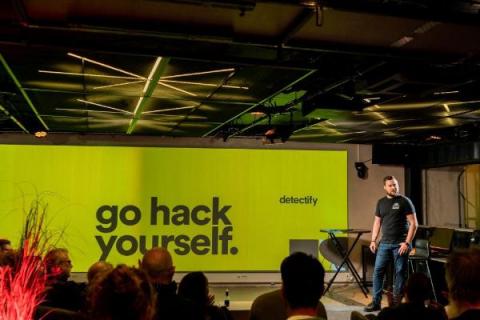
Detectify co-founder and expert bug bounty hunter Fredrik Nordberg Almroth (@almroot) recently spoke at Hack Your Stockholm, our first in-person event after a 2-year hiatus, addressing the issue of the growing attack surface of companies and how it is the most pressing issue facing CISOs today. He recaps his thoughts in this post.
The purpose of the Cyber Threat Intelligence (CTI) team is to understand the cyber threat environment and communicate intelligence so that the organisation can make better decisions about lowering cyber risk. Decision stakeholders can be people or systems therefore the information, and the way it is communicated, needs to be tailored to each user.
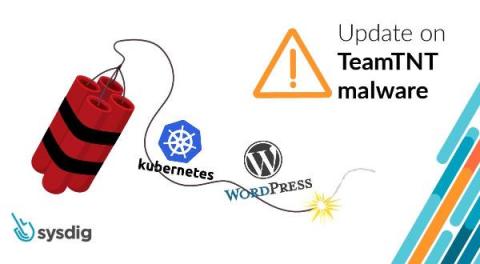
The Sysdig Threat Research Team has detected an attack that can be attributed to the TeamTNT. The initial target was a Kubernetes pod exposed outside the network. Once access was gained, the malware attempted to steal AWS credentials using the EC2 instance metadata. TeamTNT is a threat actor that conducts large-scale attacks against virtual and cloud solutions, like Kubernetes and Docker.