Mailchimp
Not subscribed to OpsMatters Newsletter


As the cyber threat evolves, adversaries are increasingly targeting non-publicly disclosed vulnerabilities in the software supply chain. Attackers are able to stealthily travel between networks because to a vulnerability in the supply chain. To combat this risk, the cybersecurity community must center its efforts on protecting the software development lifecycle.
The Privileged Attribute Certificate (PAC) is an extension to Kerberos service tickets that contains information about the authenticating user and their privileges. A domain controller adds the PAC information to Kerberos tickets when a user authenticates in an Active Directory (AD) domain. When Kerberos ticket services are used to authenticate to other systems, they can retrieve the PAC from a user’s ticket to determine their level of privileges without having to query the domain controller.
The consensus view is that the economy will fall into a recession in 2023. If the analysts’ predictions come to pass, cybersecurity companies will face a number of serious challenges. In this post, we’ll talk about the problems of managing cybersecurity during a recession—and explain how the LimaCharlie platform can be used to help cybersecurity firms and their clients weather the storm.
Our research team here at Mend has identified a new kind of malicious code that attackers can use to exploit genuine concerns about security and licenses. The code in the case below is used to prevent people from using unlicensed software, specifically by removing the code if it detects that the software is not licensed during the deployment stage. The code is tricky to understand and uses a web request to check if the software is being used legally.
No, it is not safe to use unsecured WiFi in hotels. Using any public WiFi network presents a risk to your private information and security. There are many threats that you become vulnerable to on unsecured hotel WiFi such as a man-the-middle attack or malware. Read on to learn more about the risks of using unsecured WiFi in hotels and how you can stay safe if you can’t avoid using it.
The content of this post is solely the responsibility of the author. AT&T does not adopt or endorse any of the views, positions, or information provided by the author in this article. Identity and access management has emerged as an essential security element for organizations. A study reveals that 80% of global IT decision-makers have already adopted or are planning to adopt an IAM solution in the upcoming years.
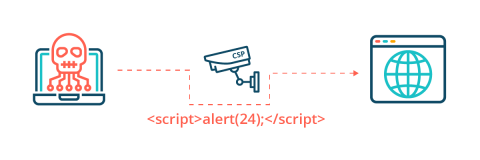
In this article, we’ll look at Content Security Policy through the eyes of a penetration tester. We will outline the advantages of CSP, explain why you should have it on your site, and share some common misconfigurations that can be exploited, along with the relevant bypass scenarios. What is Content Security Policy?
How 1Password protects your sensitive data, and why an attack on 1Password would pose no threat to information stored in your vaults.
Tines' Automation Capability Matrix is a set of techniques designed to help security operations teams understand their automation capabilities and respond more efficiently to security incidents. With this new matrix, teams can identify automation opportunities and implement strategies to enhance their threat response efforts. This blog offers key insights into the Automation Capability Matrix, giving you a comprehensive understanding of its purpose and benefits.