Mailchimp
Not subscribed to OpsMatters Newsletter


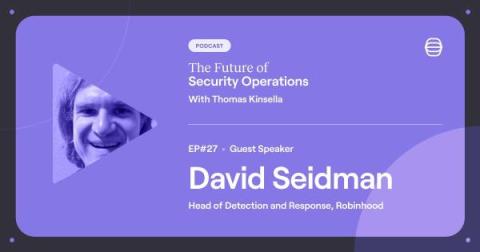
In this episode of The Future of Security Operations podcast, David Seidman joins Thomas to discuss their career to date and what they have learned along the way. David is currently Head of Detection and Response at Robinhood, an online brokerage firm with a mission to democratize finance for everyone. David has almost 20 years of experience in software and security, having worked for huge names like Microsoft, Google, Salesforce, and now Robinhood.
Recon Infosec is a growing managed security services provider run by a team of seasoned cybersecurity experts. After switching from their custom-engineered security stack to the LimaCharlie SecOps Cloud Platform, they achieved an annual cost savings of $100,000, improved their mean detection and response times by 98%, and laid the groundwork for scalable, long-term growth.
Microsoft Teams is the world’s most popular collaboration tool - used by over 300 million users globally. Its popularity stems from its breadth of collaboration capabilities, including instant chat, conversational channels, online meetings, and video calls. However, the sheer volume of content generated by these collaboration workflows can quickly lead to content management challenges.
Researchers at CYFIRMA warn that the Bahamut threat actor is using a malicious Android app to deliver malware. “The suspected Android malware, known initially as ‘CoverIm’ was delivered to victims via WhatsApp, and was found to be disguised as a dummy chatting application named ‘SafeChat,’” the researchers write.
Drata is KnowBe4’s preferred compliance automation platform for KnowBe4 customers. We have some big news. KnowBe4 has selected Drata as our exclusive GRC partner. What does that mean? As we transition KnowBe4 Compliance Manager (KCM) offering to a support-only model, we are encouraging all our current users to migrate to Drata for their compliance automation needs. After an exhaustive assessment of vendors in the market, we chose Drata for a few reasons. Here's what made Drata different.
A US hospital closed two years after a ransomware incident, highlighting that the health sector continues to be under threat.
Since Redis is becoming increasingly popular around the world, we decided to investigate attacks on the Redis instance. We didn’t have to wait long for the first results of the Honeypot. The trap caught an activity about which the Western world does not hear too often while analyzing SkidMap. More importantly, this variant turned out to be a new, improved, dangerous variation of the malware. Its level of sophistication surprised us quite a bit.
During the summer months, when employees and customers are away on vacation, things usually slow down for businesses. But for cybercriminals, the opposite is true because they are busy taking advantage of minimal staffing levels in companies during the vacation period to launch complex attacks. The U.S. Federal Cybersecurity and Infrastructure Security Agency (CISA), warns that the risk of being hit by a cyberattacks rises over the holidays and summer vacation-themed phishing attacks gain momentum.