Mailchimp
Not subscribed to OpsMatters Newsletter


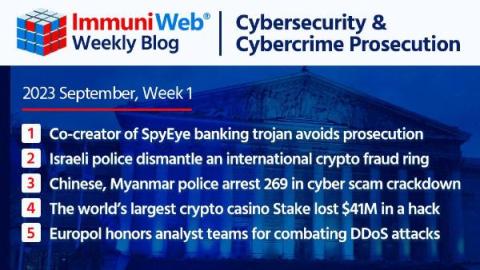
Read also: Israeli police dismantle an international crypto fraud ring, crypto casino Stake lost $41M in a hack, and more.
A selection of this week’s more interesting vulnerability disclosures and cyber security news. A big hit for a major website is always a bad thing – more so when people are expecting emails. Though in this case I suspect it is more likely the target is password reuse.
AI is one of the hottest topics in tech right now. More than half of consumers have already tried generative AI tools like ChatGPT or DALL-E. According to a Gartner poll, 70% of executives say their business is investigating and exploring how they can use generative AI, while 19% are in pilot or production mode. Business use cases for AI range from enhancing the customer experience (38%), revenue growth (26%), and cost optimization (17%).
True cyber resilience involves much more than having a disaster recovery (DR) solution. That’s because recovery from a typical DR scenario is different than recovery from a cyber event. Why? For starters, disaster recovery scenarios usually involve human nature, mother nature, or technical failure: These are just a few examples.
As a principal security researcher on Corelight’s Labs team, I help to solve difficult network security research problems at scale. Corelight’s customers might recognize some of my work if you see the packages “VPN Insights” or “App ID” on your sensors. Outside of my day-to-day role, I have a hobby podcast called eCrimeBytes where we lightheartedly discuss an electronic crime case each week.
Two new local privilege escalation vulnerabilities were recently discovered in Ubuntu: CVE-2023-2640 (CVSS 7.8) and CVE-2023-32629 (CVSS 7.8). The vulnerabilities, dubbed GameOver(lay), affect the OverlayFS module in multiple Ubuntu kernels. Ubuntu’s official security bulletin here and here outlines the impacted versions by both CVEs. It’s important to note that CrowdStrike Falcon® Cloud Security protects against both vulnerabilities.