Mailchimp
Not subscribed to OpsMatters Newsletter


Back in the 20th century, cyberattacks were harder to execute because most computers were not networked, the internet wasn’t really a thing, only a few groups of people had access to computers, and more importantly, there wasn’t any big incentive to attack.
A look at the FBI’s recent Qakbot takedown, the return of Bumblebee after a two-month hiatus, and other developing cyberthreats from 2023.
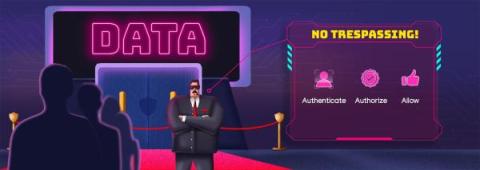
As cyber threats have grown in sophistication and frequency, a paradigm shift in security strategy has become imperative. This shift has given rise to the Zero Trust Security Framework, an approach that challenges the very foundation of trust in network security. User and Entity Behavior Analytics (UEBA) steps into the spotlight as a dynamic force that complements and enhances the Zero Trust Security framework. Let’s discover how UEBA can help organizations achieve zero trust security!
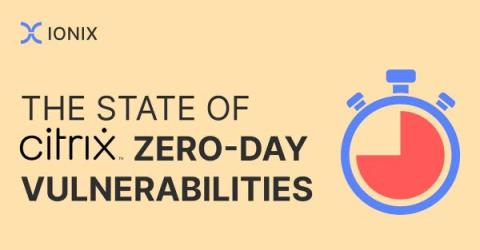
Critical zero-day Citrix CVE-2023-3519 is still being exploited two months after Citrix released a patch. IONIX research found that 19% of the CVE-2023-3519 vulnerabilities are still unmitigated in comparison to only 3% among IONIX customers. In addition, IONIX customers were able to resolve this critical risk three times faster.