Security | Threat Detection | Cyberattacks | DevSecOps | Compliance

Latest posts

9 of the Best Managed IT Services for Focused Cybersecurity Frameworks

Do you know there are between 2,200 and 2,700 impactful cyberattacks every day out of the hundreds of millions of automated attempts? The vast amount of high-potential attacks means that any business or organization needs focused cybersecurity frameworks to proactively deal with the threat. But where do you even begin? Like anything, there are many IT and cybersecurity delivery services for businesses of all sizes, needs, and, of course, budgets.

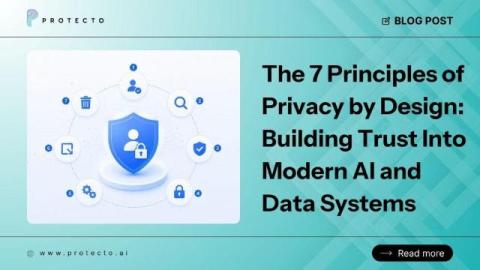
The 7 Principles of Privacy by Design: Building Trust Into Modern AI and Data Systems

Data privacy is not just a checkbox for compliance requirements. It has become a core business expectation. Customers now want to know how companies collect, store, process, and protect their data. At the same time, global regulations like the GDPR and CCPA have made privacy a critical part of product development. According to a report by the Cisco Consumer Privacy Survey, 99% of companies saw measurable benefits by investing in privacy.

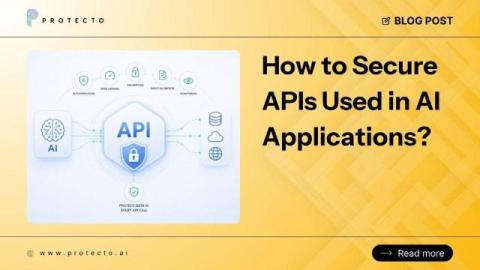
How to Secure APIs Used in AI Applications?

Every AI application runs on APIs. They carry prompts, responses, customer data, and credentials between your models, databases, and third-party services. To secure APIs in AI applications, you need strong authentication, rate limiting, encryption, input validation, and continuous monitoring. But AI adds a layer most API security checklists miss: the data inside the API calls. That data needs protection too.


Automating Identity Governance in Jira Service Management for HR to IT Access Control

In many organizations, the gap between HR and IT is a "black hole" of productivity and security. When a new hire starts, they often spend their first day staring at a login screen because their access wasn't provisioned. Worse, when an employee leaves, their access to Jira, Slack, or Entra ID might remain active for days or even weeks. This isn’t just an administrative headache; it’s a major security and compliance risk.

Why Audit Readiness Accelerates Revenue

At 3am, you wake up in a cold sweat from a nightmare. The dream? You showed up to test for your most difficult class without having studied. Unprepared, your dream self sat in an uncomfortable desk, staring at a piece of paper and panicking. In the corporate world, an audit can induce the same sense of anxiety and distress.

EveryOps in 1 min: What is Software Vulnerability?

Is there an unlocked window in your code? A software vulnerability is more than just a "bug". It's a security gap that can lead to data breaches, system crashes, and lost customer trust. In this episode of EveryOps in 1 Minute, we break down: The definition of a software. Why they happen (from coding slips to complex architecture). Real-world examples like Log4j. How to "shift left" to catch flaws before they reach production.

How CISOs Track Configuration Drift in Real Time | Misconfiguration & Cybersecurity Posture

How do CISOs feel about drift? Misconfigurations rarely look like incidents. A setting shifts, posture weakens, and nothing announces it until it already matters. That is a hard seat for whoever owns posture. Without a clear view of what changed, you are working secondhand, leaning on the team to tell you what moved and whether it hurt.

We Gave OpenClaw Red Team Tools (It Found Domain Admin)

Our Red Team handed OpenClaw a penetration testing toolkit and pointed it at one of our own legacy Active Directory networks. 23 findings across 11 attack paths... But the findings aren't the interesting part. What's interesting is how it got there. Work that takes our human team three days took the agent three hours. Mid assessment it hit a wall, reasoned about its own limitations and proposed spinning up an EC2 GPU instance to crack a password hash. Nobody told it to.

Frontier AI Explained: A Guide to What Mythos, GPT 5.5-Cyber, MDASH, and CodeMender Really Do

The cybersecurity industry is entering a new phase of AI adoption. Frontier AI models are increasingly capable of identifying vulnerabilities, investigating threats, analyzing code, and accelerating security operations at machine speed. At the same time, innovation is moving rapidly. New models, platforms, and security-focused AI initiatives are emerging across the market, each pushing the boundaries of how AI can be applied to real-world cybersecurity workflows.