In large-scale SD-WAN deployments, both enterprises and Managed Security Service Providers (MSSPs) place a high priority on ensuring that SD-WAN CPEs seamlessly integrate with the nearest Netskope NewEdge Network Point of Presence (PoP). Automating this integration process is crucial as it not only saves considerable time but also boosts business agility.
There has been a lot of talk about Artificial Intelligence (AI) in recent years. It is certainly a polarizing subject. While it raises hopes about the future of technology and what humanity is capable of, it also raises questions around human control and technological determination. There are those who worry that Artificial Intelligence is going to ‘take people’s jobs’, or even take over the world, and that the world will end up like a dystopian ‘Terminator’ style film.
If you are building an API, you are most likely evaluating the pros and cons of available technologies. Sooner or later, you will surely come across NodeJS. NodeJS helps to create stable, scalable, and backward-compatible APIs. Besides the functionalities, you can’t overlook the security risk that comes with them. Misconfigured, insecure APIs leave your companies with high-profile cyber-attacks. Like any APIs, those developed with NodeJS come with security threats.
The Payment Card Industry Data Security Council created PCI DSS as the global standard for protecting payment data. The PCI DSS is the compliance stick to which entities that transmit, store, handle, or accept credit card data of any size must adhere. Recently, PCI DSS came up with version 4.0. In this blog, we delve deeper into the new version and explain why securing APIs is critical for PCI DSS compliance and how organizations can do so.
As the premier hub for recognizing excellence in the Internet of Things (IoT), IoThinkTank’s awards highlight the creativity, innovation, and dedication of leaders within the IoT ecosystem.
By now, you have probably heard about the recently discovered backdoor into versions 5.6.0 and 5.6.1 of the tarballs of the xz utilities, a popular compression/decompression library for xz files, which provides unauthorized remote access under certain conditions. This vulnerability was reported under CVE-2024-3094. Andres Freund, of Microsoft, who discovered the vulnerability, summarized it well.
In this video, we will look into the potential risks of standing privileges and experience the user journey before and after implementing the Zero Standing Privileges (ZSP) approach for Google Cloud.
Artificial intelligence (AI) is the term on everyone's lips. As a powerful tool that can simplify our daily lives, it has become a technological revolution that impacts us all.
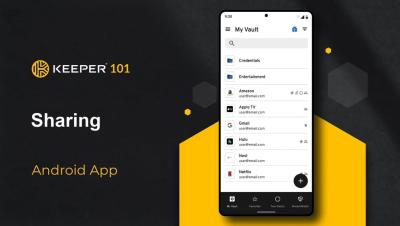
Keeper’s Android mobile app makes it easy to securely share records with friends and family. To share a record with another Keeper user, select the record from your vault and tap Share, then Share with User. Enter the user's email address or select it from the dropdown, then use the toggle buttons to choose what permissions the user will receive such as: “Can Edit”, “Can Share” and "Make Owner". If you do not enable any permissions, the user will have “view only” access. Upon tapping Save, the user will receive an email notifying them that you have shared a record.