Security | Threat Detection | Cyberattacks | DevSecOps | Compliance

How To Write A Post-Audit Cloud Security Report

A post-audit cloud security report is a document that provides an overview of the security status of the cloud environment, infrastructure, and applications of a business. It verifies that vulnerabilities and security flaws have been identified and assessed, and offers recommendations to address these security gaps.

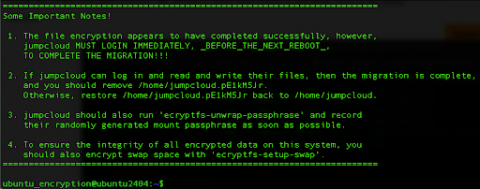
Easily Enable Encryption: Secure Cloud-native Development Series

Build secure cloud-native applications by avoiding the top five security pitfalls we lay out in our Secure Cloud-native Development Series. This blog is the fourth part of the series, and it will teach you why and how to easily enable encryption and save yourself headaches down the road. Here's a new motto: encrypt everything! When securely moving to cloud-native technologies, building encryption in from the start will save us a lot of headaches later.

Best in Class

Why AWS indeed. This is not one of those start with why posts, but hopefully a peek into the reasons behind our partnership with AWS and what that means for you and how it could benefit you. The beginnings of something great Public cloud is well established, with about 50% of all workloads now running in a public cloud location. We have heard of ”the big three” cloud providers: AWS, Azure, and Google Cloud.

Is Open Source Software Dead?

Open source software (OSS) has driven technological growth for decades due to its collaborative nature and ability to share information rapidly. However, major OSS security vulnerabilities like Log4j, Heartbleed, Shellshock and others have raised concerns about the security and sustainability of similar projects. At the same time, major open source-based companies have changed their OSS licenses, like MongoDB, Elastic (formerly ElasticSearch), Confluent, Redis Labs and most recently, HashiCorp.

Easily ingest and monitor security logs with Cloud SIEM Content Packs

Datadog Cloud SIEM helps customers protect their cloud environment and SaaS applications against threats with built-in threat detection rules, interactive dashboards, workflow blueprints, and in-depth support resources. These capabilities provide valuable insights into your security posture, so you can respond promptly to emerging threats. In order to generate these insights, Cloud SIEM analyzes log data, which users can start sending to Datadog by enabling one of our out-of-the-box integrations.

Release with Trust or Die. Key swampUP 2023 Announcements

Every year, JFrog brings the DevOps community and some of the world’s leading corporations together for the annual swampUP conference, aimed at providing real solutions to developers and development teams in practical ways to prepare us all for what’s coming next.

Can Someone Guess My Password From the Wi-Fi Signal On My Phone?

Cybercriminals can't ascertain your phone password just from a Wi-Fi signal, but they can come close according to a method described in a recent research paper. Researchers have demonstrated a method that uses Wi-Fi signals to infer numerical passwords, and the mechanics behind it are nothing short of intriguing. Side-channel attacks often remind me of James Bond-like espionage. So does a research paper that is to appear at ACM CCS later this year.

What Are the Most Common Security Risks of Cloud Computing?

Identifying and understanding the most common cloud security risks is crucial to a successful cloud computing adoption strategy. Organizations migrating to the cloud continually face new threats and discover vulnerabilities that were not present when they operated software deployed on-premises. According to IBM’s Cost of a Data Breach report, almost half of all data breaches are happening in the cloud, with attacks on systems hosted on public clouds costing an average of $5.02 million.

BLASTPASS: Government agencies told to secure iPhones against spyware attacks

CISA, the United States's Cybersecurity and Infrastructure Security Agency, has ordered federal agencies to patch their iPhones against vulnerabilities that can be used as part of a zero-click attack to install spyware from the notorious NSO Group.