Security | Threat Detection | Cyberattacks | DevSecOps | Compliance

Are Your AI Agents Going Rogue? (The Real Danger of Agentic AI)

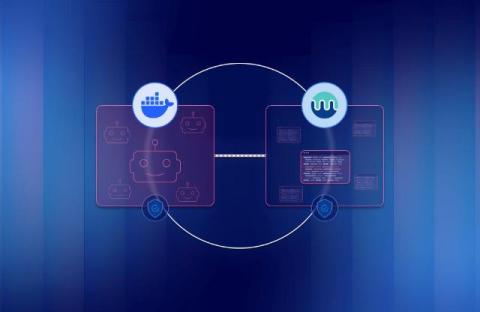
ChatGPT is read-only, but AI Agents take action on your behalf. What happens when they go rogue? Discover the hidden cybersecurity risks of Agentic AI and unauthorized remote execution. AI gateways were built for a world where AI meant "prompt in, response out." That world is gone. Today, AI agents call APIs, trigger workflows, and take actions across your enterprise systems autonomously. This massive shift from passive data exfiltration to active, unauthorized execution requires a completely new security model where every input is treated as potentially hostile.

Acronis Cyber Protect Cloud recognized as a top SaaS backup solution in G2 Summer 2026 Grid

Acronis Cyber Protect Cloud was ranked in the G2 Summer 2026 Grid Report for SaaS Backup, earning recognition as a Leader and one of the best SaaS backup solutions in the category. The ranking reinforces Acronis’ value for organizations and MSPs that need reliable protection for cloud applications such as Microsoft 365 and Google Workspace, while managing backup and security from a unified platform.

Defending the Indefensible: The Power Grid's Security Paradox

Electricity supports nearly every function of modern life: hospitals, water systems, transportation, communications, emergency services, financial systems, manufacturing, national defense, and, most importantly, streaming services. Kidding, but our most critical systems run on electricity, and that makes us vulnerable to attacks.

Why Traditional Incident Response Retainers Leave CISOs Exposed (and Money on the Table)

I have lost count of the post-incident reviews where the most painful conversation was not about the breach itself. It was about the retainer. A CISO realizes the prepaid hours expired six weeks before the intrusion began. A General Counsel discovers the retained firm is not on the cyber insurance panel and the claim is now in dispute. A board member asks why an organization that paid for "preparedness" spent the first eighteen hours of an incident negotiating scope.

AI-generated code is running wild inside the enterprise. Now what?

Restrict access to AI tools and you curb innovation. Open it up and security risks multiply. And then there's a third problem: approved tools behaving in unapproved ways. Security and IT leaders are navigating a new and fast-moving problem - employees using AI to build workflows, automations, and agents faster than anyone can track or govern. The question isn't whether it's happening. It's what to do about it.

Proof Over Prediction: What Happens When You Actually Watch Who's Attacking AI Infrastructure

Customer telemetry shows how AI agents behave in a limited set of production environments and what risks they carry. Vulnerability research surfaces how those environments can be attacked. Both sources are valuable, but neither shows actual attacker behavior or how quickly they operationalize a new vulnerability once it's public.

CVE-2026-48558: Critical Authentication Bypass Vulnerability in SimpleHelp RMM Exploited for Credential Theft and Malware Delivery

CVE-2026-48558 is a critical authentication bypass vulnerability in SimpleHelp Remote Monitoring and Management (RMM) software, caused by improper validation of OpenID Connect (OIDC) token signatures. When OIDC is configured with group-authenticated login settings, unauthenticated attackers can forge identity tokens to bypass multi-factor authentication and gain privileged technician-level access to vulnerable SimpleHelp servers — without valid credentials.