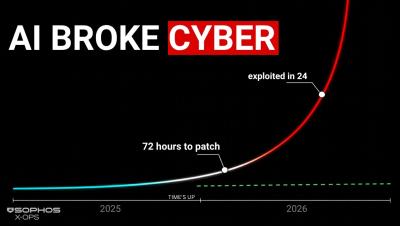
Are the repeated warnings throughout the years taking effect? Although we would like to say they are, the answer is complex and, most likely, we aren’t quite there yet.
In this episode, host Richard Bejtlich sits down with Dave Getman to discuss the evolution of Corelight Investigator and the paradigm shift from delivering raw sensor data to providing agentic triage. They explore how AI can synthesize millions of log lines into concise, actionable determinations—categorizing activity as malicious or benign—while maintaining transparency by "bringing the receipts" of raw evidence. Dave explains why the security pendulum is swinging back toward network detection to counter sophisticated EDR evasion and shares a roadmap for the future of auto-containment.
GitGuardian’s improved search bar helps teams cut down triage time by turning incident search into a single, faster workflow. Use it to safely search for matching secret values, audit incidents by author, find leaks in specific files, filter by source, and use AI Filters to ask for what you need in plain English. It is available now for all workspaces and for all plan levels. But you will need to activate AI Filters manually.
What happens when an AI agent inside your company starts behaving like an insider threat? In part two, Steve Moore picks the thread back up with former FBI operative Eric O'Neill to explore how agentic AI is rewriting cybersecurity, the legal traps that follow a breach, and why the modern CISO must think like a spy hunter.
The convergence of accelerated digitalization, complex global supply chains, and the rapid adoption of AI-driven automation, has elevated the importance of identity security. Combine this with the traditional and fragmented identity management approaches typical in manufacturing environments, and risk is multiplied. Failing to tackle identity, now becomes a direct threat to production continuity, regulatory compliance, and competitive advantage.
Almost all cloud services that allow you to manage multiple users have a dedicated administration interface. Microsoft Office 365 is categorized as software as a service (SaaS) and provides its own Microsoft Office 365 admin center. You can use this administration center to manage user accounts and mailboxes, configure the Office 365 cloud environment, monitor statistics and more. This blog post explains how to use the updated Office 365 admin center and what features can be configured.
PowerCLI is one of the most powerful tools for managing and automating VMware vSphere and vCloud. You can manage VM provisioning, storage, networking, operating systems in hosts and guests, changes, and any other aspect of VMware vSphere. Let’s take a look at what PowerCLI is and the basics of installing this VMware vSphere management tool. NAKIVO for VMware vSphere Backup Complete data protection for VMware vSphere VMs and instant recovery options.
Why did the seven-month dwell time inside that hospital surprise nobody on my team? A smart HVAC controller in a third-floor conference room sat on a US healthcare network for seven months. IT security had never inventoried it. The SOC had never seen its traffic. Within 72 hours of initial compromise, the attacker had pivoted to corporate systems and reached patient records. The final bill, as compiled in public breach reporting, lands at $12.4 million.
As organizations deploy artificial intelligence across customer service, HR, finance, and business operations, security concerns are expanding beyond traditional cybersecurity risks. Companies are no longer focused solely on protecting systems from external threats. They must also ensure AI tools behave reliably, safely, and consistently when interacting with real users.
The brief leadership crisis at OpenAI in late 2023 triggered widespread debate about the future of artificial intelligence companies. While many observers focused on governance issues, some analysts viewed the situation as evidence of deeper forces shaping the industry. As reported by The Silicon Review, entrepreneur and IFORELS founder Vlad Panin argued that the long-term balance of power in AI would depend less on public leadership disputes and more on who controls critical resources such as computing infrastructure, distribution channels, data access, and financial incentives.