The Gramm-Leach-Bliley Act (GLBA) applies to many types of financial institutions, like banks, savings and loans, credit unions, insurance companies and securities firms. It requires those organizations to explain their information-sharing practices to their customers and to protect sensitive data. On November 15, 2022, The FTC announced a six-month extension for companies to comply with data security provisions in the GLBA. The new deadline is June 9, 2023.
Patch management is an essential prerequisite for continuous cyber risk mitigation. But it’s not getting any easier. That makes finding the right security partner an essential task for any IT operations leader. But this too is fraught with difficulty in a market saturated with vendors. This is where independent market analysis can be invaluable.
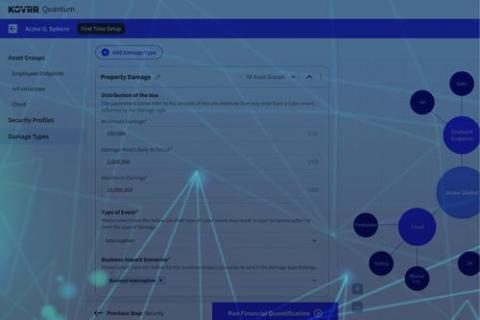
Custom Damage Types provide users with the ability to add specific types of damages that will be taken into consideration as part of the modeling process when quantifying financial exposure. This means, organizations now have a unified view of costs that consider company specific data alongside out of the box modeled costs. Users will need to provide a range of possible costs and create a scenario that triggers assigned costs.
The rise in the frequency and intensity of cybercrime has seen many organizations turning to cyber insurance to help protect against the extent of financial losses following a cyberattack. While identifying and adopting a comprehensive cybersecurity strategy is crucial, even the most secure networks can still be exploited by adept hackers. According to reports, the global cyber insurance market is projected to grow from $11.9 billion in 2022 to $29.2 billion by 2027.
A new paper outlines the impact of fraud on customer trust. According to the study paper “Fraud vs.
As an Airbnb host, you have a lot to manage. Reservations, cleaning, finances – the list goes on and on. But one of the most important parts of being a host is keeping your guests, and your property, safe and secure.