See Tanium Atlas Background Agents autonomously triage alerts, run forensics, hunt threats, and assess coverage — all while keeping humans in command. Discover the future of the autonomous SOC.
BlueVoyant SOC (Security Operations Center) and Threat Fusion Cell (TFC) teams are tracking a long-running phishing and remote access campaign that uses DocuSign/e-sign themed lures and a reusable web kit to drive victims into installing legitimate remote access tooling.
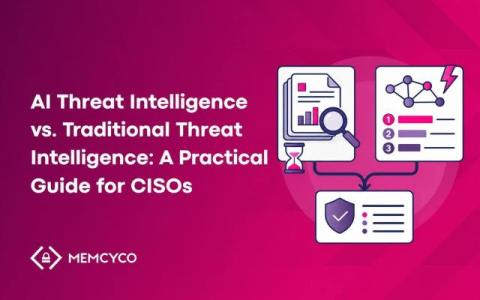
Most CTI programs aren’t failing because analysts lack skill. They’re failing because signal volumes have outpaced what any manual workflow can process. Thousands of newly registered domains, phishing kit variants, and brand impersonation attempts surface daily. Human teams can’t triage all of it. Threat intelligence automation addresses the throughput problem by automating collection, enrichment and prioritization so analysts spend time on decisions, not data wrangling.
The technology industry is very comfortable talking about the future. We talk about AI, automation, cyber resilience and digital transformation as though the next decade is something we can design, optimise and secure. But there is a more basic question the sector needs to confront. Who gets to be part of it?
The basic concept of a waiting room makes sense when you're sitting in a drafty clinic flipping through a three-year-old golf magazine waiting to be called in for a physical. But encountering one when you're just trying to buy a pair of boots online? The basic premise makes sense, but the experience rarely works like it does at the doctor's surgery. Yet, here we are. eCommerce sites getting hammered by sudden traffic peaks that make regular hosting setups curl up and die mean virtual queues are as important online as they are at a brick-and-mortar store when the Labubus are re-stocked.
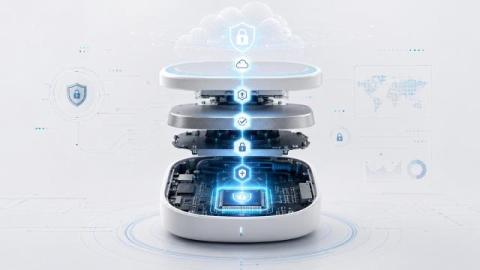
When a connected device is compromised, the headlines usually blame "the cloud" or "the network." But the most damaging IoT breaches often trace back to something far closer to the hardware: the firmware. The code running on the device itself - written, structured, and secured through embedded development - is where an attacker's job is either made hard or made easy.
Every time a promising new model shows up, I run through the same mental math before getting excited: how much of my existing agent setup survives the swap, and how much do I have to tear out and rebuild just to try it. Most of the time the answer is "more than I'd like," which is exactly why I ignore half the models that cross my feed. MiniMax M3 is one of the rare ones where the answer turned out to be "almost none of it," and it's worth walking through why, because the reasoning applies beyond just this one model.
Why does a perfectly working remote desktop still trigger security checks or display the wrong regional content? In many cases, the issue isn't the desktop itself; it's the IP address behind the connection. As businesses, developers, marketers and remote teams increasingly rely on location-sensitive online services, residential IP addresses are becoming popular for remote desktop services because they offer a connection profile that better matches real-world internet usage.
In-ear headphones have become an essential part of modern personal audio, offering a combination of portability, comfort, and sound quality. Their compact design allows users to enjoy music, podcasts, phone calls, and other audio content in a wide range of environments. As technology has advanced, these devices have evolved beyond simple wired earphones to include wireless connectivity, active noise cancellation, and smart features that improve convenience and performance.
AI expertise is cheap to claim these days. A short course, a couple of weekend projects, and a working prototype are usually enough for someone to call themselves a specialist. Getting an AI system to survive real production traffic is another matter entirely, and a lot of companies are learning that the hard way in 2026.