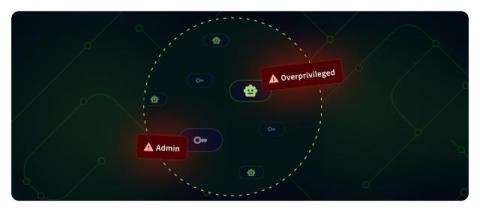
New monitoring capability delivers unprecedented visibility into vendor identity exposures, moving enterprises and government agencies from static risk scoring to protecting against actual identity threats.
Panorays, a leading provider of third-party security risk management software, has released the 2026 edition of its annual CISO Survey for Third-Party Cyber Risk Management. The survey highlights third-party cyber risk as one of the most critical challenges facing security leaders today, driven largely by a lack of visibility. While 60% of CISOs report an increase in third-party security incidents, only 15% say they have full visibility into those risks.
New research shows that organisations modernising apps are 3x more likely to see AI payoffs, while those clinging to legacy systems face rising security risks and developer talent shortages.
Like many in our industry, we wrapped up 2025 by digging into the Security Industry Association’s (SIA) annual megatrends report. Rather than just another predictions list, the 2026 SIA Security Megatrends report offers a strategic roadmap from industry trailblazers who have mapped out the specific shifts in physical security trends we can expect in 2026.
CVE-2025-59287 is a critical WSUS remote code execution (RCE) vulnerability that allows attackers to take over vulnerable Windows Server Update Services instances without authentication. With a CVSS score of 9.8, the flaw exploits unsafe deserialization, enabling remote attackers to execute arbitrary code with high impact.
Most account takeover solutions are built on a familiar assumption: if you can trust the device and secure the login, you can stop fraud. That assumption is no longer valid. Modern account takeover failures are driven by a structural issue most defenses still miss: the legitimacy gap. This is the period when access is treated as legitimate even though compromise has already occurred. During this gap, attackers operate freely while security and fraud teams see nothing actionable.
Cut through vulnerability noise! Learn how Tanium Comply’s new Exploit Intel, Endpoint Criticality, and Detected Products help you prioritize and remediate faster. What you’ll learn: Why CVSS alone isn’t enough How EPSS and exploit maturity change the game Dynamic criticality rules for business impact Detected Products for pinpoint remediation Visualize risk with the Exploitability Dashboard.
AI systems are moving fast, sometimes faster than the guardrails meant to contain them. In this episode of Security Matters, host David Puner digs into the hidden risks inside modern AI models with Pamela K. Isom, exploring the governance gaps that allow agents to make decisions, recommendations, and even commitments far beyond their intended authority.
In his first prediction for 2026, Ev explains why that strategy is about to fail. We used to let microservices run anonymously because we had bigger fires to fight. But when all software becomes autonomous AI, anonymity is a risk you can't afford. If your software behaves like a human, why separate it from your human identity strategy? The future isn't "NHI." It's a Unified Identity Layer where humans and non-humans are managed as equals.