While investigating a spike in script execution detections across several CrowdStrike Falcon platform customers, CrowdStrike’s Engineering team traced the activity to a compromised GitHub Action named aquasecurity/trivy-action. This popular open-source vulnerability scanner is frequently used in CI/CD pipelines.
On this week's episode of The Cybersecurity Defenders Podcast, Stel Valavanis, founder of onShore Networks, argues that AI is a significant milestone but does not change where security is headed. He puts AI alongside the Internet and TCP/IP and makes the case that the path forward is clear: fully embrace it as a tool, regardless of which side of the equation you are on. He also points out that agentic and automated AI was already being deployed well before LLMs arrived.
Sensitive data no longer lives in one place. It moves across file servers, SaaS apps, cloud platforms, and collaboration tools. That’s why discovering sensitive data once is not enough. In this video, Farrah Gamboa, Senior Director of Product Management at Netwrix, explains why data visibility must be continuous to keep data security manageable.
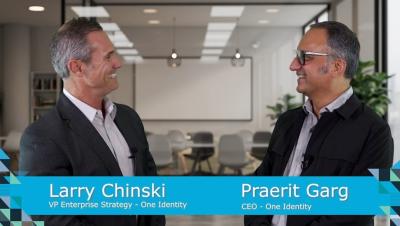
This conversation covers the principles of security, the shift of identity as the new perimeter, and the transition from detection-led to trust-led security. It emphasizes the importance of assuming network compromise, focusing on identity, and denying access based on unusual behavior. Takeaways.
Rising anxiety around decision making worries many leaders, as younger professionals fear choices that might come back to hurt their careers. The conversation argues that some struggle and hard calls build resilience, because security work often means choosing a path with partial data and then learning fast when reality hits. ⸻ For more information about us or if you have any questions you would like us to discuss email podcast@razorthorn.com. We give our clients a personalised, integrated approach to information security, driven by our belief in quality and discretion..
Cybersecurity professionals and CISO roles are under threat. Not from hackers - from AI. Information security leadership, risk management and security strategy are being marketed as something artificial intelligence can now handle. But there's a serious problem with that assumption.
More than 150,000 businesses worldwide run on Salesforce, and for most of them, the CRM already holds the most complete and up-to-date picture of who their customers and partners are. That makes it a natural foundation for identity management, not just for internal employees but also for the external users who interact with your portals, applications, and partner platforms every day.
Protecting sensitive data is essential in today’s digital world, where personal information is stored across multiple devices and online accounts. From financial details to login credentials, even small pieces of data can be used by cybercriminals if they fall into the wrong hands. The good news is that you can protect sensitive data with simple, practical steps.
One of the core pillars of the security perspective adopted by the Department of Defense is the so-called Zero Trust strategy. This strategy is the adaptation to evolving threats in the world, many of which prey on the presumption of trust from accounts and individuals that can be compromised. To protect controlled unclassified information and other sensitive data, the presumption of zero trust is necessary to eliminate many common threats.