Security | Threat Detection | Cyberattacks | DevSecOps | Compliance

The Human Touch in AI Writing: Practical Ways to Improve Content Across Different Industries

Artificial intelligence is becoming a regular part of content creation across industries. Marketing teams use AI to brainstorm campaign ideas. Business professionals use it to draft emails and reports. Educators explore AI-assisted lesson preparation, while independent creators use writing tools to organize content for digital platforms. These applications can improve productivity, but they also introduce a familiar challenge: ensuring that written communication remains clear, relevant, and appropriate for its audience.

Cybersecurity best practices for modern enterprises

Enterprise cybersecurity is no longer confined to a fixed network perimeter. Security teams now have to protect users, devices, applications, cloud services, and third-party access across increasingly distributed environments. Attackers are also targeting identities, unpatched systems, exposed services, and gaps in visibility rather than relying on a single attack method. Cybersecurity therefore needs to be treated as an ongoing program, not a project that is completed once and revisited later.

The Best AI Agent Risk Quantification Tools in 2026

Search for agent risk quantification tools and most results are risk assessment tools. Questionnaires, maturity scores, compliance trackers and templates, all producing an ordinal rating. A rating ranks one agent against another. It does not tell anybody what to spend, what to insure or what to stop. ‍ The separating question is whether the output arrives in currency.

The Autonomous SOC Was a Promise SOAR Never Kept

David Melamed is Head of Emerging Technologies at Torq. He joined through Torq’s acquisition of Jit, which he co-founded and has led as CTO since 2020, building agentic security on a production Context Graph. A cloud security veteran with 20+ years of experience, David previously held senior technical roles at Cisco (via the CloudLock acquisition) and MyHeritage. For all the gods and monsters in The Odyssey, the ship mostly moves for one reason: men row it.

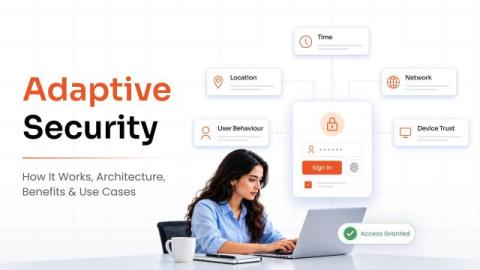
Adaptive Security: How It Works, Architecture, Benefits & Use Cases

Adaptive security is a cybersecurity approach that continuously monitors users, devices, networks, and security events to identify risks and adjust defenses in real time. Unlike static security models that rely on fixed rules and periodic updates, adaptive security responds to changes in behavior, context, and threat levels as they occur. It continuously evaluates security risks, detects unusual or suspicious activity, and adapts security controls based on the situation.

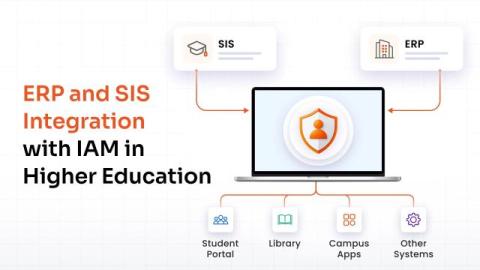
ERP and SIS Integration With IAM for Higher Educational Institutes

Higher education institutions manage identity information across systems such as Enterprise Resource Planning (ERP) platforms, Student Information Systems (SIS), and HR systems. These records determine whether someone is a student, employee, faculty member, researcher, alumnus, or another type of campus user. Integrating these systems with Identity and Access Management (IAM) lets institutions use those records to manage digital identities and access throughout the user lifecycle.

Who owns your AI agents? Probably no one

AI agents are multiplying faster than most organizations can track, let alone govern. IDC predicts there will be 1.3 billion agents by 2028. Every team that adopts one is also, often without meaning to, creating a new identity. And it’s one that can access systems, move data, and act on someone's behalf. The rush right now is to get ahead of that before it spirals, and the first step is to answer a basic question: whose job is this?

Cybersecurity Budget Planning for 2027

A budget presented as a total invites one question with two answers, approve or reduce. A budget presented as a ranked list invites a different question, which is where to draw the line, and that is a decision a board can make rather than a negotiation it can only win or lose. ‍ The ranking comes from one calculation per candidate control. Expected loss before, minus expected loss after, divided by cost. Order the list by that ratio and the budget builds itself, including the part that says stop.

Why Security Controls Need a Source of Truth | Garrett Hamilton on TAG Infosphere

Every security team has a source of truth for its assets and its identities. Very few have one for how those assets are protected. Here Garrett explains what that source of truth has to look like and why it has to be deterministic. Garrett joined Ed Amoroso of TAG Infosphere for a wider conversation on AI, security controls, and assurance. The full interview covers.