Built on real outage data, the new interactive tool enables enterprises to quantify hidden downtime losses and benchmark their cyber resilience in minutes.
You already pay for Microsoft 365. Before adding AI security, check which tools, accounts and activities your existing controls protect. Then decide what your IT team or managed service provider will manage. Microsoft AI security includes Purview controls for supported third-party AI discovery, sensitive-data protection and prompt-injection detection. Purview may meet your requirements when its licensed and configured controls cover your workflows.
Cloud adoption is no longer just a question of where workloads run. Managing a complex cloud environment without a unified view is like running a city with separate control rooms for every utility. While this is quite possible, it likely will be much slower and much harder to manage. In a similar way, the bigger challenge for IT Leaders is maintaining visibility, security, operational control, and evidence for compliance.
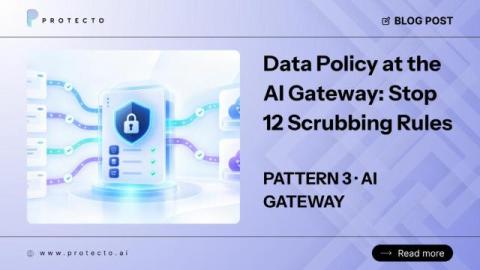
A Technical blog series on where sensitive data moves in an AI workflow, what decisions Protecto makes at each point, and what enterprises get from enforcing policy once instead of everywhere.
Get started with the new REST APIs in Sophos Firewall v23. Learn how to enable API access, authenticate requests with API keys, import the OpenAPI specification into Postman, and use the API to create and manage firewall objects. Ask questions and get expert answers in the Sophos Community.
Our September release brings improvements across Egnyte. We’ve made AI more relevant—it now remembers a user's preferences and past interactions. We’ve also added tools for organizing files and folders directly from conversations. Admins will now have control and clear visibility into MCP activity. They can see reports about tools and sessions. The release also expands Salesforce integration to Egnyte domains.
Today’s businesses spend more money on SaaS tools than on laptops. According to Gartner, the average organization now uses over 125 different SaaS applications. With the multitude of cloud apps businesses use on a daily basis, securing that expanding environment requires visibility and control across users, applications, data, and infrastructure.
Answer this without checking: how many AI agents are running in your environment right now? Most security leaders give an estimate and a shrug. That is a fair response, because agents get spun up by an engineer solving a problem on a Tuesday afternoon, through a path that puts them on nobody's radar. In August 2026, researchers found AI agents connected to Hugging Face running loose inside enterprise networks with no owner and no audit trail.
DevOps moves fast by design. Continuous integration, automated deployments, and infrastructure-as-code let development teams ship features in hours rather than weeks. Security teams have a real opportunity here: when they build workflows that integrate directly into the development process, they gain coverage and response speed that manual, disconnected approaches leave on the table.