Security | Threat Detection | Cyberattacks | DevSecOps | Compliance

Best Atlassian Apps to Reduce Cloud Costs

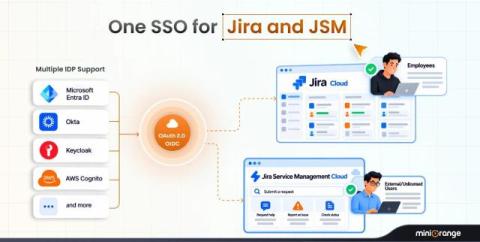
Are you trying to reduce Atlassian Cloud costs? Runaway software expenses are usually driven by three specific factors: dormant user licenses, slow manual provisioning, and paying for full access seats for temporary external collaborators. To optimize Atlassian Cloud costs, you need to address these root cost drivers directly rather than paying for seats nobody uses.

Solving the identity debt crisis with a One Identity platform approach: IGA, PAM and AD

Identities in the modern enterprise are increasingly less human and more autonomous, powered by the rise in AI agents, APIs and other non-human identities (NHIs). The result is often an entitlement sprawl, where operations take place without human oversight and with privileged access. This non-linear evolution has meant many businesses have had to respond using bolted-on tools, rather than one unified, enterprise-grade platform.

IAM Audit and Compliance Reporting: What to Track and Why

Most organizations can point to firewalls, MFA policies, and an access control list and say access is secured. Far fewer can prove it. When an auditor asks who has access to a system, why that access was granted, who approved it, what the user actually did with it, and whether it was reviewed and removed once it was no longer needed, "we have an IAM system" isn't an answer — evidence is.

How to Add SAML Authentication to Legacy Applications: A Step-by-Step Guide

Many organizations still rely on legacy applications to run core business processes. But that comes with limitations. According to the Workforce Agility Report, 50% of CIOs said legacy applications hold back digital transformations. More importantly, they create major security gaps. Most legacy applications, such as Oracle EBS, PeopleSoft, SAP, and JD Edwards, use authentication methods that do not fit modern identity requirements.

Single Sign-On (SSO): Examples With Real-World Use Cases And Login Workflows

Did you know that stolen or reused credentials show up in 13% of all 19,905 data breaches, according to the 2026 Verizon Data Breach Investigations Report? With the average business employee juggling up to 100 different passwords, it's no wonder security risks and login frustrations are at an all-time high. Studying real Single Sign-On (SSO) examples is one of the best ways to tighten access with a stronger security posture.

What is MFA Fatigue? Understanding MFA Bombing Attacks and How to Prevent Them

Somebody on your team is going to get 40 push notifications on a random Tuesday afternoon and tap "approve" just to make them stop. That's not a hypothetical. It's the most common way attackers get past multi-factor authentication (MFA) today. This piece is for IT and security leaders evaluating an MFA solution or reassessing the one they already have, because an MFA fatigue attack (also called MFA bombing) is now on their radar.

Securing Digital Identities Against Emerging Cyber Threats

As more of our lives move online, from banking and shopping to using government services, our digital identity has become incredibly valuable. Protecting it isn't just about using a strong password anymore. Cybercriminals are using more advanced tactics, which means security measures constantly need to evolve to keep up. This includes developing better threat detection systems, using multi-factor authentication, and adding subtle protections like browser checking to confirm who a user is.

What Is Identity Management: A Know-How for Scaling Enterprises

Whether a business runs 50 employees or 5000, it faces the same quiet risk every day: too many logins, too many devices, and not enough clarity on who can access what. This article has answers to it. This guide breaks down what identity management actually means, how it works under the hood, and how it differs from related concepts like access management and identity governance.

Shopify Activity Monitoring: How to Detect Anomalies & Risk Before It Impacts Your Business

Every Shopify store runs on access. Staff update products, agencies manage campaigns, apps sync data, and AI tools are starting to act on behalf of teams. That flexibility is useful, but it also creates blind spots. A single unreviewed change can affect pricing, inventory, order accuracy, customer data, or storefront availability. For merchants, the real issue is not whether activity exists. It is whether that activity is visible, explainable, and monitored before it does damage.