Security | Threat Detection | Cyberattacks | DevSecOps | Compliance

CVE-2025-9501: Identifying High-Risk WordPress Instances Using W3 Total Cache

CVE-2025-9501 is a critical remote code-execution vulnerability affecting W3 Total Cache versions prior to 2.8.13, a plugin used by more than a million WordPress sites to improve performance and caching. The issue lies in the plugin’s _parse_dynamic_mfunc handler, which can process user-controlled inputs inside dynamic fragments.

Building for the Long Game: Charlotte WordPress Developers and Sustainable Sites

That's why real businesses in Charlotte are looking for more than a quick fix. They want a partner who understands how to build digital assets that work today, scale tomorrow, and still load lightning-fast three years from now. Enter the quiet heroes of long-term success: Charlotte WordPress developers who code with foresight and optimize with purpose. Let's break down what separates sites built to last from the ones that break when you blink.

The Ultimate Guide to Affordable WordPress Hosting Options

Looking to start a WordPress website without emptying out your wallet? I have great news for you. WordPress is used to power 43.5% of all websites on the internet today. This has created a highly competitive and affordable niche of hosting plans for bloggers, small business owners and entrepreneurs. But, there's a problem... The WordPress hosting market has hundreds of different providers. With each one screaming and shouting to be the "best" and the "cheapest". So, how do you know which ones to trust and which one is actually a money-making scheme?

Secure WordPress Login with One Click | miniOrange SAML Single Sign On (SSO) Plugin

Managing multiple logins across your WordPress environment can be frustrating for both users and teams. The miniOrange SAML Single Sign On (SSO) Plugin eliminates password fatigue by allowing users to log in once and access everything they need. Connect your dashboard, store, forum, LMS, and more through one secure, seamless login experience, powered by SAML 2.0 and trusted Identity Providers like Google Workspace (Google Apps, Okta, Salesforce, Azure AD (Microsoft Entra ID), Keycloak, ADFS, Office 365, OneLogin, Auth0, PingOne, WordPress, Oracle, JumpCloud, CyberArk, and more.

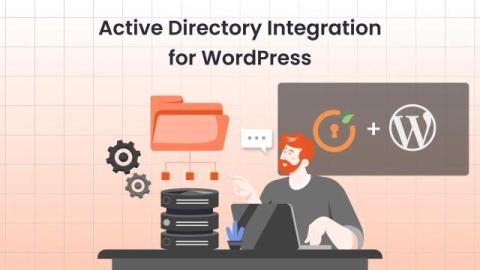
Advanced Sync Plugin Setup & Demo | Sync Active Directory (LDAP) Users with WordPress

Want to easily sync your LDAP/Active Directory users with WordPress? To show how simple it is to integrate WordPress with Active Directory in a few simple steps, we'll take you through the entire Advanced Sync Plugin setup process in this video, complete with a demo.

Setup WordPress Employee Directory with Active Directory (AD/LDAP) Search

Looking for a simple way to create an Employee Directory in WordPress using your Active Directory (AD) / LDAP? In this demo video, we’ll walk you through the complete setup of the WordPress LDAP Directory Search Plugin — making it easy to search, filter, and display employee details from your LDAP/AD server directly inside your WordPress site.

The hidden security risks of slow mobile WordPress sites

Mobile lag masks threats. When pages stall, admins postpone updates, logs grow noisy, and attackers get more tries. Treat WordPress security as a performance problem too, because mobile site speed directly shapes your risk. Harden your stack and cut the mobile attack surface, start with mobile optimization for WordPress websites.

Unauthenticated SSRF in Ditty WordPress Plugin (CVE-2025-8085)

A critical Server-Side Request Forgery (SSRF) vulnerability—CVE-2025-8085—has been discovered in the popular WordPress plugin “Ditty (News Ticker & Display Items)” for versions prior to 3.1.58. The issue resides in the displayItems REST API endpoint (wp-json/dittyeditor/v1/displayItems), which lacks authentication and authorization, allowing unauthenticated attackers to force the server to fetch arbitrary URLs—internal or external—via crafted JSON payloads.

Thousands of WordPress Sites at Risk After Gravity Forms Breach

A critical vulnerability in the popular Gravity Forms WordPress plugin has led to widespread malware injections across thousands of sites. The flaw is being actively exploited by threat actors, some of whom are inserting backdoors and malicious JavaScript into WordPress sites to carry out data theft, SEO poisoning, and client-side attacks.