Security | Threat Detection | Cyberattacks | DevSecOps | Compliance

Gcore Super Transit Brings Advanced DDoS Protection and Acceleration for Superior Enterprise Security and Speed

Gcore, the global edge AI, cloud, network, and security solutions provider, has launched Super Transit, a cutting-edge DDoS protection and acceleration feature, designed to safeguard enterprise infrastructure while delivering lightning-fast connectivity.

Featured Post

AIOps Delivers Best Practice Security and Performance to the Network and Business

Maintaining robust network security in today's threat climate is a challenge. Adhering to best practices is just as difficult. However, both are necessary to ensure that organizations can continue running efficiently and securely with minimal interruption or downtime to the network.

Diskless Infostealer, Next-generation Delivery?

In a recent social-engineering attack targeting the hospitality sector observed by the ThreatSpike team, there appears to be a change in the tactics employed by the threat actor. The hospitality sector, where top-notch customer-service is expected, customer-facing employees are often lucrative targets for phishing, as detailed in our previous blog post.

How to Cut PCI DSS Scope and Eliminate Compliance Costs

Securing PCI and PII data is at the core of what we do at Protegrity. You can try out Protegrity’s capabilities today, through our API Playground. This section walks you through some sample scenarios of de-identifying PCI data, so that it is removed from your environment and only reversed once it leaves it. To run this example, you have to be signed up to the Protegrity API Playground.

Third-Party Security Risks: How to Mitigate Potential Cybersecurity Threats

Cooperation is the key to success, and working with third parties helps your organization increase efficiency, offer better products and services, employ highly qualified experts, and cut costs. However, all these benefits come at the price of additional cybersecurity risks. Even minor flaws in your third-party vendor’s security and privacy routines may lead to serious cybersecurity breaches in your organization.

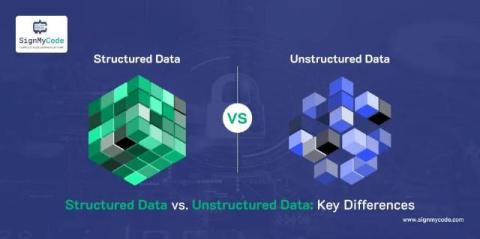
Structured Data vs. Unstructured Data: Key Differences Explained

The amount of data worldwide is growing rapidly. According to the experts, in 2024, there was a significant 791.94% increase in data generation. There are mainly two types of data: structured and unstructured data. Both are used, maintained, and analyzed differently. But what is the basis of differentiation, and how can one find out which one is the best. In this blog, you will find out the pros and cons and use cases. So let’s begin!!

Say Goodbye to SaaS Security Gaps with Cato CASB

As organizations increasingly depend on SaaS applications, IT teams struggle with visibility and governance. Shadow IT, unmanaged devices, and limited monitoring capabilities create blind spots, exposing enterprises to compliance violations, data exfiltration, and insider threats. Risks don’t come only from unsanctioned applications: even widely used SaaS platforms can become a security liability when not properly controlled.

Best Practices for Jira Sandbox to Production Migration

Jira sandboxes provide strategic leverage for the development lifecycle. Unfortunately for IT teams, migrating them to production environments is rarely straightforward. That means backups should be immediately pointed out as a vital part of the process. A smooth migration means tested changes in the sandbox are moved to the live system without errors. This makes the platform stable and minimizes potential problems.

Resurgent North Korean Malware Campaign in npm

Hello from the Veracode Research blog! It’s been a minute since we’ve done a malware write-up, but we’re back and ready for action! And speaking of folks who are back and ready for action, the North Korean attackers behind the crypto wallet stealer campaign we wrote about in February of 2024 and again in May of 2024 are back at it with a new batch of malicious npm packages.

How Research Supports the 2025 Bitsight Rating Algorithm Update

In keeping with Bitsight's ongoing commitment to making its ratings more meaningful and more representative of an ever-changing Cybersecurity landscape, the Ratings Algorithm Update for 2025 is scheduled to go into preview on April 8, 2025. The highlight of RAU 2025 is the incorporation of the Web Application Security(WAS) risk vector into the Bitsight Security Ratings1, and the associated deprecation/removal of Web Application Headers(WAH) risk vector.