Security | Threat Detection | Cyberattacks | DevSecOps | Compliance

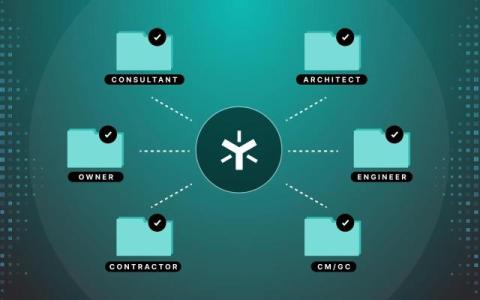
The Hyperdrive for Your Data

Whether it needed to outrun Imperial fighters or make the Kessel Run in less than 12 parsecs, the Millennium Falcon simply couldn’t work its magic without a functioning hyperdrive. Similarly, today’s business enterprises need a way to move vast amounts of data quickly, securely, and without interruption—but relying on the public internet simply isn’t cutting it. Data is one of the most valuable resources a business can have.

Guide: What is the CMMC-AB (Accreditation Body)?

Every year that goes by shows an improvement in technology, often by leaps and bounds over previous technology. What used to be the realm of far-off science fiction so unbelievably exotic that it defined genres is now a commonplace reality. With new technology comes new threats. We’ve seen a dramatic increase in digital threats, from the SolarWinds supply line attack, to the compromised Outlook services, to the currently-ongoing Salt Typhoon attack on telecom companies.

AI Governance in AppSec: The More Things Change, The More They Stay the Same

Every hype cycle brings fresh security concerns, and AI is no exception. AI governance might sound like uncharted territory, but it’s really just another evolution of the same security principles AppSec teams have been applying for years. The fundamentals—secure coding, risk management, compliance, and policy enforcement—haven’t changed.

The founder's guide to accelerating growth with compliance

For founders of early-stage startups, growth is the North Star. You’re focused on building a great product, winning customers, and scaling fast. Security compliance? It’s probably not on your radar—but it should be. ‍ The reality is, compliance isn’t just a nice to have or a box to check when a customer asks to see a SOC 2 report. It’s a revenue accelerator.

Why Organisations Still Fall Victim to Phishing and How to Avoid It

Phishing remains a significant threat to organisations, despite advancements in cybersecurity. The tactics used in phishing attacks have evolved significantly. Attackers now use advanced techniques like spear phishing, targeting specific individuals or roles within an organisation, and clone phishing, which duplicates legitimate messages but includes malicious links.

Bridging Innovation and Policy: Zenity's Strategic Discussions in Washington DC

I recently had the fantastic opportunity to represent Zenity in a round of strategic discussions with legislative and policy leaders in Washington DC as a part of the OpenPolicy Coalition. Zenity has recently partnered with OpenPolicy and joined the ecosystem in the effort to bridge the gap between bleeding edge innovation and traditional policy.

How metadata wrestled control of FINRA's colossal data archiving requirements

The financial industry is known for its rigorous and sometimes quirky data retention requirements that can challenge even the most seasoned security expert. For example, FINRA Rule 4511 requires members to "preserve for a period of at least six years those FINRA books and records for which there is no specified period under the FINRA rules or applicable Exchange Act rules." Keeping six years of records: That's no small feat. But it's certainly doable.

Quick FIX log management: How metadata simplifies financial protocol tracking (and how Corelight's platform can help)

Financial institutions, such as banks and trading houses, have a strong interest in recording key transaction activity within their networks. In the face of daunting data storage requirements, many are finding that Corelight’s network metadata—notably metadata produced by Zeek—is the key to a simplified tracking and storage process. Many of our customers used to rely on packet capture (PCAP).

Fortifying Financial Services Cybersecurity with Threat Intelligence and Cybersecurity Automation

The World Economic Forum’s Global Cybersecurity Outlook 2025 Insight Report paints a bleak picture of what the year ahead holds for technology security teams worldwide. However, some industries are likely to be worse off than others.

How AI is Transforming Cyber Attacks

Since its introduction into cybersecurity in the late 1980s as a tool for detecting unusual activity, artificial intelligence (AI) has grown in popularity and functionality, with a major surge of adoption happening in the past few years, thanks to its growing ability to perform tasks faster and more accurately than humans. However, AI has never operated in isolation; it has always relied on human input. And any advanced technology that requires human input can be used for both good and bad.