For over a year the future has lacked clarity. As parts of the world start to open up and the life sciences industry ramps back up to pre-pandemic activity, the fog of uncertainty is starting to lift. We are seeing an acceleration of digital transformation across the Life Sciences industry with the adoption of decentralized trials, real world evidence, and remote monitoring.
The ability for security teams to integrate threat data into their operations substantially helps their organization identify potentially malicious endpoint and network events using indicators identified by other threat research teams. In this blog, we’ll cover how to ingest threat data with the Threat Intel Filebeat module. In future blog posts, we'll cover enriching threat data with the Threat ECS fieldset and operationalizing threat data with Elastic Security.
Mergers and acquisitions (M&A) enable companies to add products and services to their portfolios, giving them a way to scale their business. To gain true visibility into a company’s long-term impact on your organization’s bottom line, you need to understand all assets and liabilities, including digital ones.
Image Source: Pexels This blog was written by an independent guest blogger. Historically, the idea of artificial intelligence (AI) saturating our world has been met with suspicion. Indeed, it’s one of the more popular tropes of science fiction — learning machines gain sentience that helps them take over the planet.
Machine learning is a loaded term. While machine learning offers amazing potential for advancing technologies, it often gets used as a marketing buzzword describing glorified pattern recognition. So it becomes increasingly difficult to know if the application of machine learning to existing technology is going to break new ground or sell more licenses. That’s the problem that Frank Fischer, Product Marketing for Snyk Code, explores in his RSAC 2021 talk ML in SAST: Disruption or Distraction.
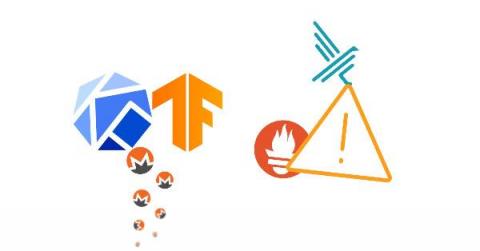
Microsoft has discovered a new large-scale attack targeting Kubeflow instances to deploy malicious TensorFlow pods, using them to mine Monero cryptocurrency in Kubernetes cluster environments. Kubeflow is a popular open-source framework often used for running machine learning tasks in Kubernetes. TensorFlow, on the other hand, is an open-source machine learning platform used for implementing machine learning in a Kubernetes environment.