Security | Threat Detection | Cyberattacks | DevSecOps | Compliance

Online Gambling Fraud: How Fake Sites, Apps and Social Ads Divert Player Deposits

Online gambling fraud includes more than bonus abuse, payment fraud, account takeover and suspicious withdrawals on a genuine betting platform. Fake gambling sites, cloned apps and deceptive social ads can capture players before they reach that platform, diverting registrations, credentials and deposits into an attacker-controlled or unlicensed environment.


When scanners miss the attack: how Cloudflare Client-Side Security protects storefronts

A modern storefront can look perfectly healthy while malicious JavaScript works underneath: siphoning affiliate revenue, hijacking searches and clicks, tampering with analytics, or asking a remote server what to execute next. Pages load, products appear, and checkout works — yet the browser may be quietly doing something the site owner never authorized. That is the blind spot our Client-Side Security machine learning (ML) model is built to expose.

Top 7 API Security Tools for Banks and Fintechs in 2026

Every digital banking transaction today, whether it’s a fund transfer, a loan approval, or a balance check through a fintech app, runs through an API. API security for banking means protecting these connections from attacks that go far beyond simple hacking attempts: fraud rings probing for account access, bots automating fake transfers, and partners quietly overstepping the access they were given.

Four gaps IRM was never built to close

A buyer’s checklist for the IRM gaps a ServiceNow program leaves open. Many teams deploy IRM, watch the assessments come back clean quarter after quarter, and reasonably conclude they are covered. Months later, the greatest risk turns out to have been outside the sample. It may have changed the week after the review, or lived in a control type nobody tested, or lacked context or prioritization to see its importance.

Sophos Fusion: Support Assistant overview

The Sophos Support Assistant answers your security and product questions directly within Sophos Fusion (formerly Sophos Central). It’s powered by Sophos documentation, knowledge base articles, user guides, and Community content, delivering relevant, up-to-date guidance to help you find answers and resolve issues faster. Learn how to access and use the Support Assistant. Ask questions and get expert answers in the Sophos Community.

Cato SMB FlexPool: Scale Managed SASE with Less Friction

As an SMB managed SASE business grows, the real challenge is often operational: how to add customers and respond to changing needs without adding licensing friction. Cato SMB FlexPool helps eligible MSPs and service providers managed committed capacity at the partner level, supporting faster growth, better utilization, and control of the managed service experience. Contact your Cato channel representative to discuss SMB FlexPool eligibility and pool sizing.

From Encrypted Mobile Traffic to Payment Manipulation

How KomodoSec’s AigentX Penetration Tester reverse engineered client-side encryption, turned the bypass into reusable Burp tooling, and used that access to validate a real business-logic flaw in a production mobile application. Client-side secrecy failed. Server-side trust became the real vulnerability. THE CHALLENGE A mobile app with TLS, certificate pinning, and a second encryption layer.

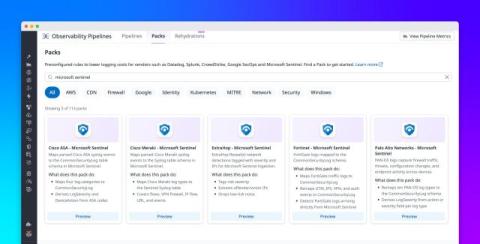
Transform and route security logs to Microsoft Sentinel tables using Observability Pipelines

Microsoft Sentinel is Microsoft’s cloud-native SIEM for detecting, investigating, and responding to threats across your environment. To query security data and run analytics rules, Sentinel expects telemetry data in specific table schemas. But firewall, VPN, and network detection logs arrive in vendor-specific formats, making source-specific mappings difficult to maintain as environments grow.

Demo - Agent Action Control

Netskope Skylight Agent Action Control is an inline security capability within the Netskope Skylight AI Security suite designed to evaluate, govern, and enforce real-time controls over the actions performed by autonomous AI agents. Rather than simply blocking or allowing an entire AI application or coding assistant, it intercepts attempted agent operations—such as code pushes, database modifications, or API calls—before they execute.