Security | Threat Detection | Cyberattacks | DevSecOps | Compliance

CTEM Validation: How to Confirm What's Really Exploitable

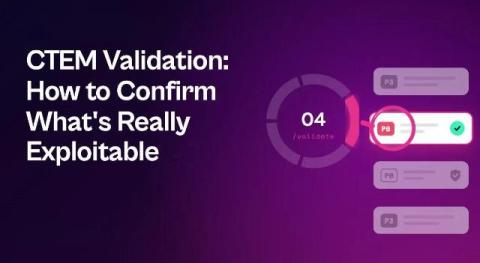
CTEM validation is the fourth stage of continuous threat exposure management. It confirms whether a prioritized exposure is actually exploitable in your environment and whether existing defenses would stop an attack. Common methods include penetration testing, breach and attack simulation, attack path analysis, and automated exploitability analysis.


Session on Metabolic Disorder Prevention at CIO500 Awards by our Founder & CEO Mr. Anirban Mukherji

In this session, our founder and CEO Anirban Mukherji explained how to master metabolic fasting to optimize your health. Learn the practical steps to reset your body and improve daily energy levels. It breaks down the core science behind how your body processes fuel. He examined the hunger code to help you understand why you feel hungry at specific times and how to regain control over your eating patterns. By implementing these strategies, you can begin managing cravings effectively without feeling deprived or overwhelmed.

The Cyber Loss Where the Stolen Records Belong to Other Companies

A breach response begins with a record count and a notification assessment. How many individuals, in which jurisdictions, under which statute. ‍ Some organizations hold almost no personal data and enormous quantities of other companies' commercial confidences. An insurer's claims files contain policyholders' loss histories, control failures and settlement amounts. The statutory machinery may not engage at all, and what engages instead is a contract portfolio. ‍

Which AI Signals Carry a Finding and Which Only Size It

A correlation rule joins several telemetry sources and fires when they agree. Guidance on writing them concentrates on thresholds, ordering and tuning for noise. ‍ The decision that determines whether a rule works is upstream of all of that. Each source in a rule plays one of three roles, and treating them interchangeably is what produces a rule that misses real events or fires on ones nobody can act on. ‍

If AI Can Build the Exploit, It Can Write the Patch

The window between an exploit being discovered and actively used is around eight hours. Curtis Koenig, Head of Application Security at Gen, explains why zero trust and a prepared incident response process remain the foundation for security teams navigating this new threat landscape. "The good news is that if the tool can find a vulnerability and create an exploit, it can find a vulnerability and write a patch as well.".

Why Open Source Is the Easiest Target for Supply Chain Attacks

Attackers targeting open source dependencies already have all the code they need. Curtis Koenig, Head of Application Security at Gen, explains the fundamental asymmetry and why building quality fixes at speed is the real challenge for defenders. "An attacker can produce very fast, very ugly code that propagates through as an attack. When we're trying to fix something, the challenge we have is we're always trying to build for quality.".

Treat Your AI Agents Like Humans or You Are Creating Risk

AI agents are about to act as humans inside your organization. Curtis Koenig, Head of Application Security at Gen, explains why treating them with the same identity and data controls is the single most important step to get ahead of AI risk. "We're going to give these agents the capability to do things as though they were humans. If we are not treating them like we treat our other human users in our organizations, that's where we're creating risk.".

How the Arctic Wolf Agentic SOC Delivers Faster, More Accurate Security Outcomes

Learn how Arctic Wolf Superintelligence Platform and the Swarm of Experts work together to deliver faster, more accurate outcomes for customers by leveraging unmatched telemetry, deterministic models, our golden data set and human expertise.

How to Use Aurora Security Assistant for Deeper Security Expertise and Context

In this demo, we will look at different use cases for the Aurora Security Assistant including the data explorer queries, organizational risk and vulnerability information, and quick answers around self-service and product documentation.

Bring Your AI. Give It Reach. | Reach Security

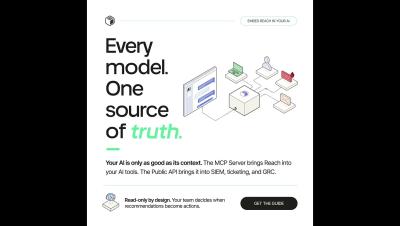
Point an AI model at a security stack it doesn't fully understand and you get confident, wrong answers faster. Reach gives your AI a source of truth for security controls. The MCP Server connects MCP-compatible AI tools directly to Reach. The Public API brings Reach findings and evidence into SIEM, ticketing, and GRC workflows. The MCP Server is intentionally read-only, so your team decides when recommendations become actions.