Security | Threat Detection | Cyberattacks | DevSecOps | Compliance

Introducing Salt Claude Connect: Continuous MCP Server Visibility for Claude Enterprise

As AI adoption accelerates inside enterprises, security and IT teams are increasingly asking a foundational question: what exactly is connected to our AI, and what can it access? For organizations running Claude Enterprise, Salt now has a direct answer. Salt Claude Connect links Salt to Claude’s Compliance API and provides continuous, read-only visibility into the MCP (Model Context Protocol) servers connected to your Claude Enterprise organization.

Detectify Cyber Hygiene Index Report reveals that most critical vulnerabilities sit unfixed for months

The Detectify Cyber Hygiene Index Report H2 2026 measures something most reports ignore: not what happened after an attack, but what’s exposed right now, before one occurs. We analyzed anonymized data from a sample of +1290 organizations across the US, UK, and Nordics to understand how effectively they’re finding, monitoring, and closing vulnerabilities across their external attack surfaces.

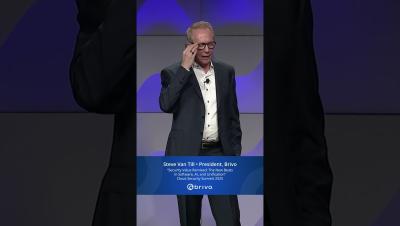
Why Open Architecture Beats Vendor Lock-In (And Customer Data Ownership)

Should your access control and physical security platform hold your data hostage? In this highlight from the Brivo Cloud Security Summit, Brivo President Steve Van Till dives into the critical importance of open architecture in modern software. Discover why vendor lock-in restricts enterprise growth and learn how true open systems empower organizations to retain 100% ownership, management, and control over their own data.

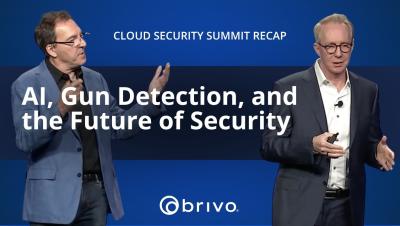
What Did You Miss at Last Year's Cloud Security Summit?

Is AI a "mass extinction event" for traditional software? In this insightful session from Brivo’s 2025 Cloud Security Summit, CEO Dean Drako and President Steve Van Till break down how artificial intelligence is disrupting tech and revolutionizing the physical security space. Learn how AI-driven tools—like real-time visual gun detection, natural language search, and hybrid cloud-edge architecture—are transforming safety protocols and making security platforms faster, smarter, and more scalable than ever before.

FBI Winter SHIELD's Cybersecurity Controls Are Worth a Second Look

AI adoption is making everyone faster, including the attackers we as cybersecurity practitioners are competing with. While the attackers are getting faster thanks to AI, it’s not changing why most preventable breaches happen. That part is remaining consistent, for better or worse.

Mobile App Security: Reverse-Engineering APKs and IPAs to Uncover Hidden Attack Vectors

Buried in OpenAI’s evaluations of its GPT-6 Astra model sits a finding that mobile teams should sit with for a minute. The model reverse-engineered compiled software well enough to escape a browser sandbox and chain privilege-escalation flaws on a hardened operating system, according to the company’s published evaluations. Reading compiled binaries used to be specialist work priced in weeks, and now it’s something machines do quickly and well.

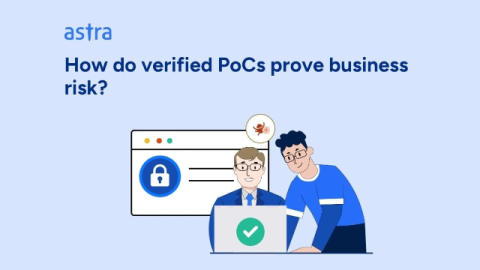
Beyond the Scanner: How Verified PoC exploits Prove True Business Risk

On September 1, OpenAI announced that its new model, GPT-6 Astra, had become the first to cross the “Critical” cybersecurity threshold in the company’s Preparedness Framework. Most coverage focused on the safety implications, and fairly so, but buried in the announcement sits a benchmark result that should change how every security leader reads their next vulnerability report.

Jev's Paradox: The hidden cost of cheap AI decisions

This article was first published on LinkedIn. Consider a cybersecurity alert for a potentially malicious PowerShell script that downloads and runs a file. An AI agent in a security operations center (SOC) can handle it by picking from a fixed set of actions: close the alert as benign, collect more evidence, or send it to an analyst. Before letting the agent act on such alerts, the SOC needs to know how often it picks correctly and whether its confidence helps identify its mistakes.