Winning risk management in 2026: Harness emerging technology trends for unstoppable success

Risk management has come a long way from outdated spreadsheets and static reports. Today’s dynamic business landscape demands a robust framework that not only responds to threats swiftly but also leverages emerging technology trends to transform potential pitfalls into strategic advantages. In this article, we explore how integrating cutting-edge innovations with risk management techniques can lead to unstoppable success.
Predict and Prevent: How AI is Changing Insider Risk Management

Insider risk has become one of the most urgent and financially consequential cybersecurity challenges for today’s organizations. Insider Risk is a top concern for the C-Suite and Boards, and organizations must be prepared to detect and respond to insider risks. In fact, according to IBM’s Insider Threat Report, 83% of organizations reported at least one insider-related security incident in 2024 (IBM, Insider Threat Report, 2024).

SessionReaper (CVE-2025-54236): Impact, Detection, and Mitigation

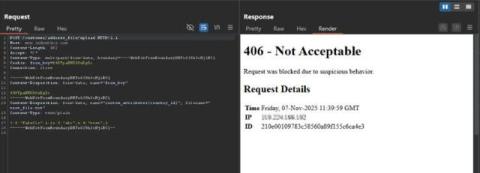
SessionReaper (CVE-2025-54236), an unauthenticated vulnerability in the Commerce REST API enables session takeover and possible RCE. If you run Adobe Commerce or Magento Open Source, this critical, pre-auth vulnerabilities can let attackers hijack customer accounts, manipulate orders, and in many real-world setups drop persistent PHP web shells on your servers.

Configuration management for secure endpoint control

Configuration management enforces consistent endpoint and system policies to prevent misconfigurations, reduce risk, and simplify compliance. By establishing secure baselines, automating enforcement, and detecting configuration drift, organizations strengthen their security posture. Netwrix Endpoint Management further enhances protection with automated monitoring, rollback, and compliance alignment to safeguard sensitive data and identity-based access.

NTLM Relay Attacks: Back from the Dead - and Still Haunting Active Directory

NTLM Relay attacks should be history. Yet in 2025, they remain one of the most effective ways to compromise Active Directory. We first covered this problem back in 2020, when we wrote about a troubling vulnerability that refused to die: NTLM Relay attacks. At the time, many believed NTLM Relay attacks were a relic of the past, an old problem long solved by Kerberos and modern authentication protocols.

The Security Imperative: Trust, Speed, and Integral Defense

The systemic nature of software supply chain attacks is growing more complex, creating a critical tension between speed and security. The Israeli National Cyber Directorate’s (INCD) recent “Breaking the Chain” report validates that the most significant threats live outside your first-party code, highlighting a crisis of trust in the open-source-software (OSS) supply chain.

How Responsible AI Governance Strengthens Cybersecurity Defenses

Here's something that should keep you up at night: cybercrime might cost the global economy $10.5 trillion every year by 2025. That's not a typo. Traditional security measures? They're already struggling to keep pace. Attackers have figured out how to weaponize artificial intelligence, launching sophisticated campaigns that waltz right past conventional defenses like they're invisible.

Behind the Laughs: The Security Measures Keeping Meme Coins Safe

In the fast-moving crypto world, meme coins have evolved from internet jokes into serious digital assets with multi-million-dollar market caps and thriving communities. But their playful origins sometimes make people question how secure they really are. Projects like Shiba Inu, Dogecoin, PEPE, and countless others rely on advanced blockchain protocols and community-driven safeguards to maintain a high level of stability and trust. Understanding these protective layers is essential for anyone interested in joining the wave of digital finance.

Seven Bibliography Mistakes SparkDoc Catches, Plus How to Keep Them Out of Your Drafts

Good writing can wobble at the finish line when the references go wrong. Reviewers notice. Teachers notice. Readers who care about sources notice first of all. Bibliography mistakes do not only weaken credibility, they slow down the whole process because every small error leads to another round of checking. This guide looks at the errors that appear again and again, plus how an AI-aware workflow reduces them without turning the page into a sales pitch. The goal is a clean, verifiable bibliography that supports the argument rather than distracts from it.