Cato CTRL Threat Research: Vulnerability Discovered in Open WebUI Enables Account Takeover and Remote Code Execution (CVE-2025-64496)

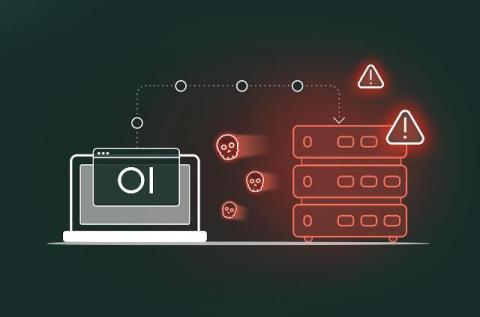
Cato CTRL’s Vitaly Simonovich (senior security researcher) has discovered a vulnerability (CVE-2025-64496 with a “High” severity rating of 7.3 out of 10) in Open WebUI in versions 0.6.34 and older. This flaw affects the Direct Connections feature, which lets users connect to external AI model servers (ex: OpenAI’s API). If a threat actor tricks a user into connecting to a malicious server, it can lead to an account takeover attack.

Cloud vs On-Premised SIEM: One or the Other or Both?

While Hamlet asked the existential question “to be or not to be,” most security teams ask an equally esoteric question that ultimately defines their ability to manage alerting and detection: “to deploy on-prem or in the cloud?” When adopting a security information and event management (SIEM) solution, organizations must make a foundational decision around whether to deploy the solution on-premises or in the cloud.

Agentless IoT Security: How to Secure Devices You Can't Touch in 2026

As IoT and operational technology environments expand, organisations are discovering that a large portion of their device estate simply cannot be secured using traditional methods. Many devices cannot run agents, cannot be patched regularly, or cannot tolerate downtime. In 2025, this reality is no longer the exception—it is the norm.

Zero Trust Implementation: Why it Matters and How to Implement

Zero Trust is a security mindset and architecture that assumes no user, device, or network is inherently trustworthy, requiring continuous verification for every access request. Unlike a single tool or product, it requires a holistic strategy that integrates strong identity controls, such as MFA and least privilege access. Success with Zero Trust hinges on cultural shifts, executive buy-in, and ongoing adaptation to threats that emerge beyond the initial setup.

Cloud Computing and Code Signing as A Service: Stats, Future and Trends 2026

Whenever you press the update button on your phone, or your server requests a new container image, an act of faith is being performed. You are relying on the fact that the code that you are downloading is what the developer wrote. You are hoping that a hacker didn’t place a backdoor in between. Our years of verifying trust with a basic digital handshake: Code Signing. But here is the thing. It is a weakened handshake. I call CTOs and security leaders weekly, and they are afraid.

The new unit economics playbook for ecommerce operators

EcomWatch is a digital publication launched by experienced ecommerce entrepreneurs who believed the industry needed a news outlet built by people who actively run online stores. Its mission is to deliver timely, evidence based insights across the ecommerce ecosystem. What follows reflects that operator lens: the hard levers that improve contribution margin and cash flow in a market where customer acquisition is pricier, fulfillment is more complex, and signal quality is noisier.