What Is Managed ITDR and How MSPs Use It for Identity Threat Detection

There are numerous ways of carrying out cyberattacks. Identity is now one of the most common ways attackers gain access to systems. Instead of malware or exploits, attackers rely on stolen credentials or reused passwords. They abuse permissions to carry out sophisticated attacks that appear normal on the surface. Basic monitoring tools cannot detect these attacks. Identity misuse is becoming more common. Many organizations now work across cloud services and remote access.


CVE-2026-1281 and CVE-2026-1340: Unauthenticated RCE Zero-Day Vulnerabilities in Ivanti Endpoint Manager Mobile

On January 29, 2026, Ivanti released fixes for two critical zero-day code injection vulnerabilities affecting Ivanti Endpoint Manager Mobile (EPMM). The vulnerabilities, tracked as CVE-2026-1281 and CVE-2026-1340, impact the In-House Application Distribution and Android File Transfer Configuration features and allow unauthenticated remote threat actors to achieve remote code execution.

Fast, Secure, Resilient: Modernizing Application Security at Scale

Software release cycles are now too fast for traditional security tools. Rapid iterations and reliance on open-source and cloud-native tech increase vulnerabilities, challenging AppSec teams to keep up. Attackers are taking advantage, targeting applications and exploiting misconfigurations, excessive permissions, and vulnerable plug-ins.

Emerging Ransomware Threat: Reverse Engineering the Green Blood Group Golang Payload

During routine Dark Web Monitoring activities, Our Threat Intelligence Team identified a newly active ransomware operation calling itself The Green Blood Group. The group operates a dedicated Tor-based leak site and follows a double-extortion model, threatening public disclosure of victim data when negotiations fail. The screenshot shown above captures the group’s Tor portal in its current state.

CVE-2026-24858: Fortinet Multiple Products Authentication Bypass Zero-Day Analysis

CVE-2026-24858 is a critical authentication bypass vulnerability(CWE-288: Authentication Bypass Using an Alternate Path or Channel) in Fortinet products. It affects FortiOS, FortiAnalyzer, FortiManager, and potentially FortiProxy. An attacker with a FortiCloud account and registered device can log into devices registered to other accounts if FortiCloud SSO is enabled. Disclosed January 27, 2026, as actively exploited zero-day. CVSS 9.4 (some sources cite 9.8).

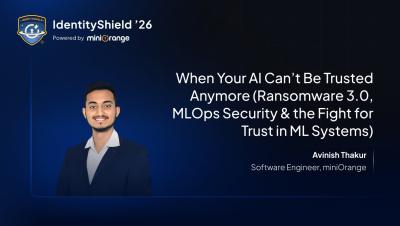
When Your AI Can't Be Trusted Anymore | IdentityShield '26

What if your ML system is running perfectly—but making the wrong decisions? This talk explores Ransomware 3.0, where attackers poison models and pipelines instead of locking systems, and shows how AI‑augmented attacks bypass traditional security and how to defend against silent ML compromise. Speaker: Avinish Thakur Software Engineer, miniOrange Pune, India.

The best ISO 27001 compliance software for 2026

For lean teams, ISO 27001 can feel like a lot to take on. You’re expected to set up a formal security program, assess risks, write and maintain a long list of policies, and have audit-ready proof on hand—often without a large security or compliance headcount. ‍ On top of that, manual work and outside consultants can get expensive fast, pulling founders, engineers, and operators away from building the product and growing the business.

Fool Me Once: How Cybercriminals Perfected Deception | LevelBlue Threat Trends Report (Ed. 2)

Originally recorded in 2025, we look back at how cybercriminals perfected deception during the first half of the year. Now available as an archive recording, the session highlights the second edition of the LevelBlue Threat Trends Report and explores real-world incident data, fast-moving attack chains, and the social engineering techniques that shaped the threat landscape at the time. While the data reflects early 2025, many of the lessons remain relevant for understanding how today’s threat environment evolved.

How to Build Custom Data Detectors Without Regex: DLP for Context-Aware Detection

DLP systems have traditionally relied on regex pattern matching to identify sensitive information. While regex excels at finding patterns, it fundamentally can’t understand context. It’s a massive limitation that forces security teams into endless cycles of tuning expressions and triaging false positives. Nightfall AI built prompt-based entity detection to solve this problem.