Fool Me Once: How Cybercriminals Perfected Deception | LevelBlue Threat Trends Report (Ed. 2)

Originally recorded in 2025, we look back at how cybercriminals perfected deception during the first half of the year. Now available as an archive recording, the session highlights the second edition of the LevelBlue Threat Trends Report and explores real-world incident data, fast-moving attack chains, and the social engineering techniques that shaped the threat landscape at the time. While the data reflects early 2025, many of the lessons remain relevant for understanding how today’s threat environment evolved.

How to Build Custom Data Detectors Without Regex: DLP for Context-Aware Detection

DLP systems have traditionally relied on regex pattern matching to identify sensitive information. While regex excels at finding patterns, it fundamentally can’t understand context. It’s a massive limitation that forces security teams into endless cycles of tuning expressions and triaging false positives. Nightfall AI built prompt-based entity detection to solve this problem.

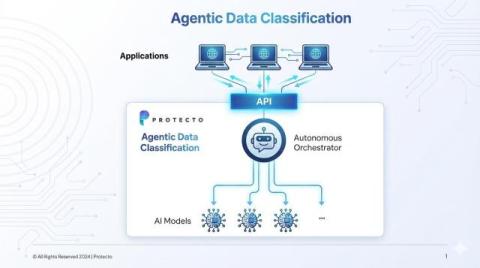
Agentic Data Classification: A New Architecture for Modern Data Protection

In the evolving landscape of data protection and compliance, data classification is the bedrock of safe AI workflows. Yet legacy approaches rely on singular models that are fixed, rigid, and limited in context. Our agentic data classification approach reshapes this paradigm by not relying on any single model. Instead, we orchestrate a dynamic, intelligent layer that automatically selects the right model for the job.

Why Performance-Based Questions Are the Real Security+ Challenge (and How to Beat Them)

If you've passed a multiple-choice certification exam before, you might assume the CompTIA Security+ will be more of the same. You read the question, eliminate two obviously wrong answers, pick the best remaining option, and move on. Then you hit your first performance-based question. Suddenly you're staring at a simulated firewall interface, asked to configure ACL rules for a production web server. There's no A, B, C, or D. Just a blinking cursor and a timer counting down. This is where most Security+ candidates panic, and it's exactly why PBQs exist.
Featured Post

AI for Security Infrastructure: Rebalancing Cybersecurity for the Decade Ahead

For more than a decade, cybersecurity has been shaped by a single doctrine: assume breach. Facing high-volume, relentless, and diverse attacks, the security industry has been forced into a reactive stance, playing a constant game of whack-a-mole in a nonstop damage-limitation exercise. This has driven major investment in detection, response, and recovery, and created a world in which organizations are better at reacting to incidents than at preventing them in the first place.

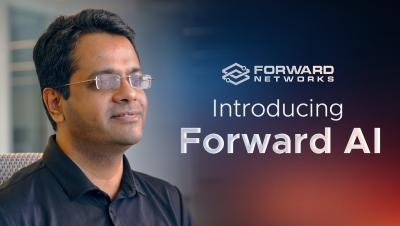
Introducing Forward AI

The Network is Complex. Operating It Shouldn't Be. Forward AI transforms network operations by reducing manual analysis, expert dependency, and guesswork. By combining conversational interaction with a mathematically accurate digital twin, teams can validate intent, understand actual network behavior, and act with confidence across even the most complex environments.

Cyber Recovery vs. Disaster Recovery: What You Need to Know

Today’s IT leaders face a non-stop escalation of stealthy cyberattacks designed to hold organizations hostage. The dialogue has shifted from if you will be compromised to when. The financial stakes are incredibly high. According to a 2024 study by Splunk and Oxford Economics, “outages cost businesses over $400 billion in revenue each year.” For many Technology decision-makers, the instinct is to rely on traditional disaster recovery plans.

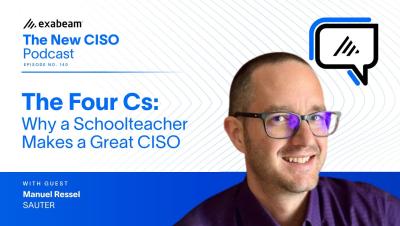
The New CISO Podcast Ep. 140 - Manuel Ressel | The Four Cs: Why a Schoolteacher Makes a Great CISO

In this episode of The New CISO, host Steve Moore speaks with Manuel "Manu" Ressel, CISO at SAUTER Group, about his unconventional journey from classroom teacher to cybersecurity leader—and why the "Four Cs" of modern education provide a powerful framework for building effective security programs. Drawing from years as both a teacher and school principal in Germany, Manu introduces Critical Thinking, Communication, Collaboration, and Creativity as essential leadership skills that fundamentally challenge how the industry approaches awareness training and incident response.