What Physical Site Safety Can Teach Cybersecurity Teams About Risk Management

Cybersecurity is often treated as a purely digital challenge, focused on networks, applications, and protecting sensitive data. However, many of the most effective risk management principles used by cyber security teams already exist in physical environments such as construction sites, industrial facilities, and critical infrastructure.

5 Essential AI Tools for Project Managers to Boost Productivity in 2026

It's 2026, and if you're still manually color-coding spreadsheets or manually typing meeting minutes, you're stuck in the past. We are no longer "task trackers", we're "strategic navigators". But with the release of GPT-5.2 and the deluge of AI agents, it's noisy. I've seen so many PMs download 20 different AI apps and they're all the same: "generating some generic text for you". If you really want to save time, you don't need more writing tools; you need a varied toolkit that takes care of the different parts of your brain: your scheduler, your communicator, your designer, your librarian.

Secure AI with CrowdStrike: Real-World Stories of Protecting AI Workloads and Data

AI is reshaping business at machine speed. From automating claims to improving customer engagement, organizations are embedding AI into core workflows faster than most security teams can track. As AI systems expand, they introduce a new class of security considerations. AI no longer lives in a single layer of the stack. It runs on cloud infrastructure, processes sensitive data, and operates through a growing network of human and non-human identities.

The CISA ChatGPT Incident Makes the Case for AI-Native DLP

The acting director of America's Cybersecurity and Infrastructure Security Agency—the person tasked with defending federal networks against nation-state adversaries—triggered multiple automated security warnings by uploading sensitive government documents to ChatGPT. If this happened at CISA, it can happen at your organization too.

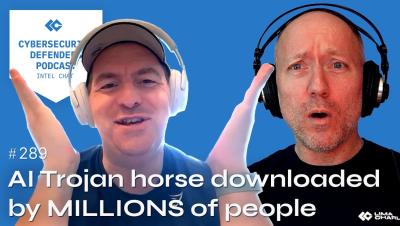
Intel Chat: PeckBirdy, ShinyHunters, Moltbot impersonation & ELECTRUM [289]

In this episode of The Cybersecurity Defenders Podcast, we discuss some intel being shared in the LimaCharlie community. Support our show by sharing your favorite episodes with a friend, subscribe, give us a rating or leave a comment on your podcast platform. This podcast is brought to you by LimaCharlie, maker of the SecOps Cloud Platform, infrastructure for SecOps where everything is built API first. Scale with confidence as your business grows.

Your servers shouldn't need to know ACME

CertBot assumes every server that needs a certificate should also know how to request one, validate domain ownership, handle renewals, and manage failures. This makes sense with a handful of servers. One server, one cert, done. But infrastructures grow. Now you’ve got web farms sharing wildcards, load balancers, mail servers, VPN appliances. The “every server for itself” model doesn’t scale and isn’t sustainable. Even the Let’s Encrypt community knows it.

Entity Detection Plus Protection: Nightfall's New Approach to Comprehensive DLP

For years, data loss prevention has meant one thing: finding sensitive entities. Social Security numbers, credit card numbers, API keys—if you could pattern-match it, you could protect it. But this approach has always had fundamental limits. What happens when you need to protect customer IDs unique to your business? What about proprietary source code that doesn't contain any traditional PII?

The Economics of an Agentic SOC: How AI Reduces Security Operations Costs

See how Torq harnesses AI in your SOC to detect, prioritize, and respond to threats faster. Request a Demo This article was originally published on Security Info Watch. Running a SOC has never been cheap — but in 2026, it’s become unsustainable. The combination of surging alert volumes, rising labor costs, sprawling tool stacks, and skyrocketing breach expenses has pushed the traditional model to the breaking point.

API-Based Zero Trust Assessment: Measuring Your Security Posture in Minutes

Zero Trust (and probably many general posture) conversations stall at one question: Where are we actually today? Because Reach connects directly through APIs, teams can quickly assess their environment without deploying new agents or ripping anything out. That makes it practical to benchmark a Zero Trust program against the CISA Zero Trust Maturity Model — and see what’s real vs. assumed.

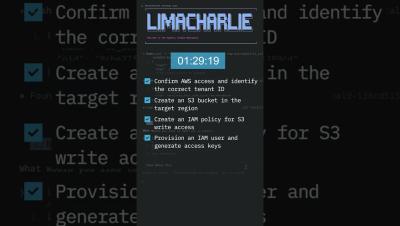
Claude Code configures AWS S3 export for security detections #cybersecurity #ai

Claude Code automates the entire detection export pipeline from LimaCharlie to AWS S3. The agent confirms AWS access, creates buckets with proper regional placement, provisions IAM policies with appropriate permissions, stores credentials securely, and enables continuous delivery. Security data flows from LimaCharlie to S3 for retention and analysis without manual AWS configuration.