Manic Monday: A Day in the Life of Threat Hunting

John, a Cyber Threat Intelligence (CTI) analyst, turns to look at his CISO. He seems a bit rattled. John responds, “Yeah. Huge story.” “Massive. The board is worried and wants to know if this puts us at risk. We’re secure, right?” John hesitates.“Let me get back to you on that.” The CISO walks away. John races to his desk.

Release 829: More Tracking Flexibility, Better Mac Parity, and Enhanced Security

We are excited to announce Platform Release 829, a major update designed to give you surgical control over your monitoring environment while bringing the Mac Agent closer to feature parity with Windows. This release focuses on delivering greater flexibility in tracking, ensuring privacy and security go hand-in-hand. Here is a summary of the new features and improvements available in this release. For an extensive list, please refer to the detailed Release Notes.

What does a virtual CISO (vCISO) actually do?

A virtual CISO is your on-demand cybersecurity resource. We provide the same strategic leadership as an in-house CISO, without the full-time commitment. vCISOs are used by organisations that need experienced security leadership to meet their compliance requirements, manage cyber risk, and guide security decisions, but don’t yet have a permanent CISO, or may have an interim requirement for a vCISO.

Secure AI with CrowdStrike: Real-World Stories of Protecting AI Workloads and Data

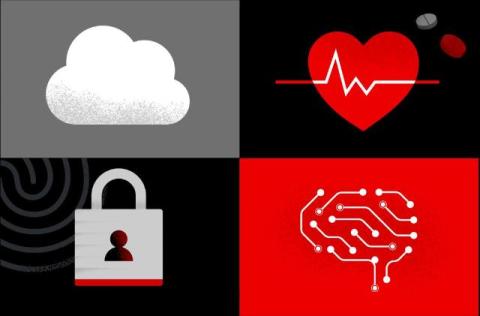
AI is reshaping business at machine speed. From automating claims to improving customer engagement, organizations are embedding AI into core workflows faster than most security teams can track. As AI systems expand, they introduce a new class of security considerations. AI no longer lives in a single layer of the stack. It runs on cloud infrastructure, processes sensitive data, and operates through a growing network of human and non-human identities.

The CISA ChatGPT Incident Makes the Case for AI-Native DLP

The acting director of America's Cybersecurity and Infrastructure Security Agency—the person tasked with defending federal networks against nation-state adversaries—triggered multiple automated security warnings by uploading sensitive government documents to ChatGPT. If this happened at CISA, it can happen at your organization too.

Intel Chat: PeckBirdy, ShinyHunters, Moltbot impersonation & ELECTRUM [289]

In this episode of The Cybersecurity Defenders Podcast, we discuss some intel being shared in the LimaCharlie community. Support our show by sharing your favorite episodes with a friend, subscribe, give us a rating or leave a comment on your podcast platform. This podcast is brought to you by LimaCharlie, maker of the SecOps Cloud Platform, infrastructure for SecOps where everything is built API first. Scale with confidence as your business grows.

Your servers shouldn't need to know ACME

CertBot assumes every server that needs a certificate should also know how to request one, validate domain ownership, handle renewals, and manage failures. This makes sense with a handful of servers. One server, one cert, done. But infrastructures grow. Now you’ve got web farms sharing wildcards, load balancers, mail servers, VPN appliances. The “every server for itself” model doesn’t scale and isn’t sustainable. Even the Let’s Encrypt community knows it.


Entity Detection Plus Protection: Nightfall's New Approach to Comprehensive DLP

For years, data loss prevention has meant one thing: finding sensitive entities. Social Security numbers, credit card numbers, API keys—if you could pattern-match it, you could protect it. But this approach has always had fundamental limits. What happens when you need to protect customer IDs unique to your business? What about proprietary source code that doesn't contain any traditional PII?

The Economics of an Agentic SOC: How AI Reduces Security Operations Costs

See how Torq harnesses AI in your SOC to detect, prioritize, and respond to threats faster. Request a Demo This article was originally published on Security Info Watch. Running a SOC has never been cheap — but in 2026, it’s become unsustainable. The combination of surging alert volumes, rising labor costs, sprawling tool stacks, and skyrocketing breach expenses has pushed the traditional model to the breaking point.