What is Transport Layer Security?

Transport layer security (TLS for short) refers to a protocol that aims to offer authentication, data integrity and privacy during the communication between two different computer applications. Keep reading to learn why it is important for your organization. Every web developer aims to keep the communications conducted over the internet as safe as possible but despite all the good intentions, this is an involved task due to the flawed designs and sub par implementations of Transport Layer Security.
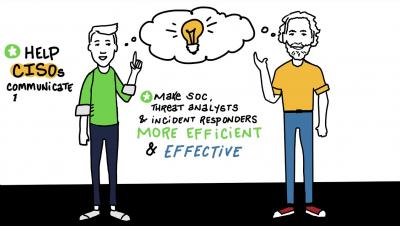

Who's Responsible for Industrial Cybersecurity and Securing OT Environments?

Who are the key stakeholders involved when it comes to securing OT environments? Kristen Polous, General Manager of Industrial Cybersecurity at Tripwire, discusses who should be responsible for ICS security and how these stakeholders can work together to address cyber risks.

Working from Home Security Tips for Staff and Employers

While over 70 percent of global employees work remotely at least once per week and full-time remote workers are increasingly common, there are still aren't a lot of resources that help address the cybersecurity risk introduced by remote work. In the past, workplaces that weren't set up to work remotely, simply didn't.

The Biggest Challenge Affecting Industrial Cybersecurity Organizations

Implementing a robust cybersecurity program is no small feat, especially for critical infrastructure organizations. Kristen Polous, General Manager of Industrial Cybersecurity at Tripwire, shares the number one challenge affecting industrial cybersecurity customers today and how to overcome it.

The future of cybersecurity for connected cars

Connected cars have slowly become mainstream, with more than 700 million of them expected to be operating on roads by 2030. Most new vehicles are leaving production lines with a host of features that require a connection to the online world, including GPS, lane assistance, collision avoidance, and modern infotainment systems. However, while connected vehicles offer abundant opportunities for the consumer, automakers need to seriously consider what they mean for consumer privacy and security.

How Fortinet and Tigera Protect Kubernetes in the Enterprise

Container use continues to grow, and Kubernetes is the most widely adopted container orchestration system, managing nearly half of all container deployments.1 Successful integration of container services within the enterprise depends heavily on access to external resources such as databases, cloud services, third-party application programming interfaces (APIs), and other applications. All this egress activity must be controlled for security and compliance reasons.

Adversary tradecraft 101: Hunting for persistence using Elastic Security (Part 1)

Last month, we hosted a webinar, Hunting for persistence using Elastic Security, where we examined some techniques that attackers use in the wild to maintain presence in their victim’s environment. In this two-part blog series, we’ll share the details of what was covered during our webinar with the goal of helping security practitioners improve their visibility of these offensive persistence techniques and help to undermine the efficacy of these attacks against their organization.

Increasing Digital Volumes and Shifting ATM Usage Amid COVID-19: Are you ready?

As the Coronavirus (COVID-19) reality hits home, retail banks and credit unions all over the globe have been quick to respond to customer and employee safety concerns. In Canada last week, we witnessed the Big Six – Bank of Montreal, CIBC, National Bank of Canada, RBC, Scotiabank and TD – temporarily closing branches and encouraging customers to shift their interactions to ATMs, online and mobile banking channels.