Micro Lesson: Entity Normalization with Lookup Tables
Learn how to normalize entities across data sources in Cloud SIEM with lookup tables you create and configure in Sumo Logic.

A reverse proxy server (or reverse proxy) facilitates a user’s requests to a web server/application server and the server’s response. A load balancer receives user requests, distributes them accordingly among a group of servers, then forwards each server response to its respective user. From the brief definitions above, it’s clear that reverse proxies and load balancers have some overlapping functionalities.
Over 250,000 people in the US live off the grid, meaning they do not rely on public utilities such as electricity and water. Their aim is generally to live more independently and self-sufficiently, rely on solar or other eco-friendly technologies, and build a stronger connection with nature. However, most people who choose this lifestyle are very much reliant on the Internet.
In the last few years, Kubernetes has grown exponentially in popularity. Its wide adoption can be attributed to its open source nature, flexibility, and ability to run anywhere. Developers also love the fact that you can manage everything in Kubernetes using code. kubectl is the Kubernetes-specific command line tool that lets you communicate and control Kubernetes clusters. Whether you’re creating, managing, or deleting resources on your Kubernetes platform, kubectl is an essential tool.
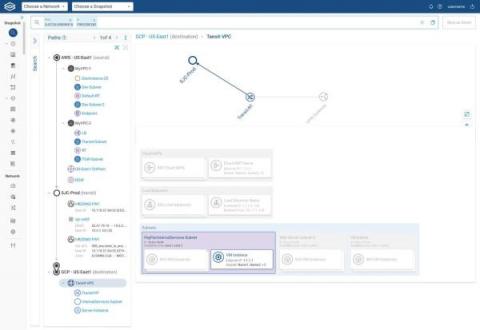
If your enterprise is like most of Forward Networks’ customers, then your IT shop oversees a sizable cloud estate. You probably have hundreds of accounts, projects, or subscriptions across different cloud vendors. There are tons of related objects too — virtual machines, firewalls, transit gateways, subnets, and more. And cloud-native apps? Maybe you hundreds of those in use or development as well.
The Kroll Artifact Parser and Extractor (KAPE) utilizes Targets and Modules to collect and parse digital evidence. Its Compound Targets and Compound Modules call upon other Targets and Modules in order to collect and parse the most important data as efficiently as possible. One of KAPE’s most widely used Compound Targets for incident response (IR) is KapeTriage.
In the age of fake news and fake emails, fake Amazon emails are becoming a major problem. If you’re not careful, these fake messages will cause some serious problems for your company’s reputation.
Software supply chain attacks are on the rise – the attacks increased by more than 600% between 2020 and 2021. On RubyGems, the official package repository for the Ruby programming language, attackers usually take advantage of the implicit trust developers have on the gems deployed on the platform and infect them with malicious code.