What Does PCI DSS 4.0 Mean for Client-Side Security?

PCI DSS 4.0 couldn’t have come at a more opportune time, particularly as the global pandemic forces more individuals into online purchasing—from shopping and entertainment to healthcare and hospitality. With PCI 4.0 compliance mandated by 2025, it is critical to understand now what it will mean for client-side security, so businesses can begin the implementation process.


The 443 Security Simplified Podcast - Episode 197: Package Hijacking

This week on the podcast, we discuss the line between ethical security research and malicious activity thanks to a compromised open source software package. After that we cover the latest industry to fall victim to Ransomware and end by highlighting a 0-click vulnerability in Zoom’s message system discovered by Google Project Zero. The 443 Security Simplified is a weekly podcast that gets inside the minds of leading white-hat hackers and security researchers, covering the latest cybersecurity headlines and trends.

WatchGuard Wins Big at the 2022 IT World Awards with Six Honors

We are proud to announce that for the seventh year in a row, WatchGuard has been recognized at the IT World Awards for 2022, securing six wins across multiple categories. This prestigious awards program honors information technology and cybersecurity vendors with advanced, ground-breaking products, solutions and services that are helping set the bar higher for others in all areas of IT and security.

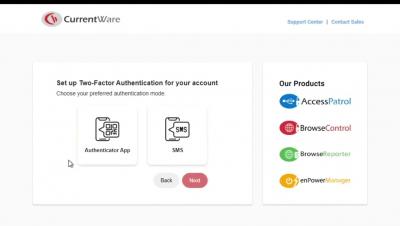
How to Enable Two-Factor Authentication (2FA) in the CurrentWare Suite | CurrentWare v7.0.1 Tutorial

This video will teach you how to set up two-factor authentication (2FA) in CurrentWare version 7.0.1. Two-factor authentication provides an extra layer of security if anyone other than you attempts to log in to your CurrentWare web console using your account.

How to use Atomic Red Team to test Falco rules in K8s

The best way to know if something works is to try it out. Ensuring that your security products are actually working is a fundamental task of routine maintenance. This is why it is so useful to use tools like Atomic Red Team that generate suspicious events based on ATT&CK techniques and see how Falco triggers alerts. In this blog, we will cover how to install and run the Atomic Red Team environment on a Kubernetes system for testing Falco rules.

CMMC & FedRAMP: FIPS Certified vs. Compliant vs. Validated

The Federal Information Processing Standard (FIPS) 140-3 (2019) is “applicable to all federal agencies that use cryptographic-based security systems… and shall be used in designing and implementing cryptographic modules that federal departments and agencies operate or are operated for them under contract.” In other words, any organization that stores, processes, or transmits certain government information must do so in a way that conforms to the FIPS standard.

The Right Foundational Technology Makes a "Hybrid Flexible" Workplace Possible

Two years ago, the world shut down. We all lived through the start of the pandemic, when the world’s white-collar workforce was sent home en masse. Remote work became the only option for employees in many positions across many companies. This working environment was isolating, and staff required entirely new workflows just to keep business processes functional—but we survived it.

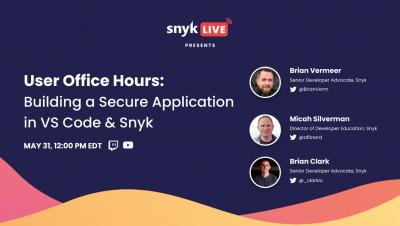
User Office Hours: Building secure application in VS Code with Snyk

Visual Studio Code (VS Code) is a code editor redefined and optimized for building and debugging modern web and cloud applications. The Snyk integration for VS Code can help you create secure applications from the beginning. Join us to learn more about Snyk VS Code capabilities. During this session, we’ll take a look at: Throughout the session you can ask us anything! Bring all of your Snyk questions and we’ll do our very best to answer them.

What Does Defense-in-depth Mean and How Does it Bring Infrastructure and Data Security Together?

With the rise of ransomware and cyber attacks, the term defense-in-depth has risen to the forefront, but what exactly does it mean? At its core, defense-in-depth is a protection mechanism for network security–an approach that involves layering or using multiple controls in series to protect against possible threats. This layered concept provides multiple redundancies in the event systems and data are compromised.