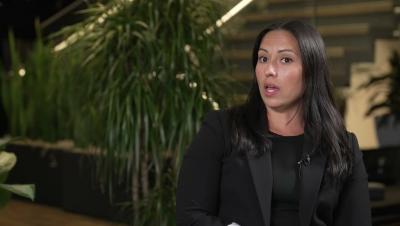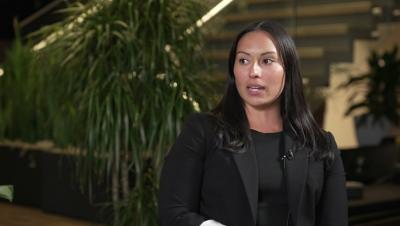
What do you Like Most About Being a BitSight Advisor?
Hear from our BitSight Advisors on why they enjoy the challenge of helping customers solve problems to achieve their third-party risk program goals.

Most companies are determined to make remote work feasible for the future. To do so, they need the right tools to maintain data security while their employees work here, there, and everywhere. There are many tools on the market that enable cloud security, and understanding which options are right for your business can be confusing. Different vendors offer different features, compliance with different regulations, levels of complexity, and types of coverage.
Often regarded as the Californian version of the General Data Protection Regulation (GDPR), the California Consumer Privacy Act (CCPA) aim’s to increase consumer rights by giving California residents greater control over the use of their personal data. The CCPA heavily regulates the use of any data that could potentially link to the identity of a consumer or household, either directly or indirectly.
During the pandemic, many forward-thinking manufacturers took shifts in consumer demands and in-person work patterns as an opportunity to modernize their factory floors and operational infrastructure. Now as supply chain challenges and inflationary forces come to the fore, the entire industry will be called to continue their innovative investments to make manufacturing processes speedier, more efficient, and equipped to compete in a new era.
Two-factor authentication (2FA) is a type of multi-factor authentication (MFA). Both authentication solutions provide additional account security by requiring additional factors of authentication. To understand how exactly 2FA and MFA differ, it’s firstly important to understand the concepts of authentication and factors of authentication.