UpGuard Reporting Improvements Demo // Chris Schubert, Senior Product Manager

Hear from UpGuard's Senior Product Manager, Chris Schubert, as he introduces you to UpGuard's new Reporting Improvements Our new reports library which centralizes a variety of frequently used reports for you to explore and generate. Some updates we’ve made to both BreachSight and Vendor Risk reports; making it easier for you to generate either executive level summary reports or detailed reporting.


UpGuard Vendor Risk Matrix Demo // Annie Luu, Product Marketing Manager

Hear from UpGuard's Product Marketing Manager, Annie Luu, as she introduces you to UpGuard's new Vendor Risk Matrix. The new vendor risk matrix, that measures vendor security ratings by business impact, has been added to the Vendor Risk Executive Summary. This feature will help drive action where it matters most, highlighting your vendors of most concern in the top right of the matrix.It’s now easier to quickly focus on the most impactful areas of your third party risk management program, by visualizing your vendor portfolio risk by Security Rating and Tier.

How Secure is My Password?

A secure password contains randomized letters, numbers and characters with a minimum length of 8 characters. Memorizing strong passwords can be difficult which is why passwords are often reused. While reusing passwords makes it easier for you to remember, it also makes it easy for cybercriminals to gain access to your personal data. To prevent your data from falling into the wrong hands, it is important to learn the best practices that will ensure your passwords are secure.

Why Vendor Risk Management is Critical for Indian Businesses

Few Indian businesses are included in the ever-increasing list of major data breaches. But data suggests that this streak of luck could soon be reaching its end. Increasing third-party security risks and a deficiency of security controls addressing them create the perfect conditions for a large-scale global supply chain attack facilitated by breached Indian business.

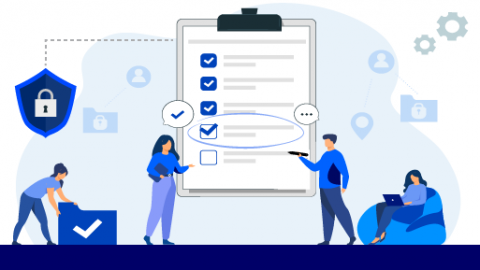
HIPAA Compliance Checklist 2022

The Health Insurance Portability and Accountability Act (HIPAA) is a data privacy and security regulation for the healthcare industry. It is a comprehensive regulation that ensures your organization complies with the requirements of HIPAA. Organizations looking to achieve HIPAA Compliance must meet the requirements outlined by the regulation. Further, failure to comply with HIPAA regulations may result in substantial fines, especially in case of an incident data breach.

Cloud Data Management Capabilities (CDMC) framework: the challenges & best practices

Cloud adoption has gained solid momentum over the past few years. The technology has been helping organizations revolutionize their businesses and optimize their processes for increased productivity, reduced cost, and better scalability. But as organizations pour their entire focus on improving their businesses, they tend to lose control of governance. One of the many reasons that data governance tends to get more out of control is when organizations increasingly adopt a hybrid or multi-cloud model.

Teach Egnyte's AI to Recognize Your Documents for Better Security

Egnyte has been developing and using AI technology with Machine Learning (ML) for quite some time. We use it internally to detect sensitive information for our customers so that policies can be put in place to protect that information, and we continue to find new ways to implement these models to better support our customers.

What is eKYC Verification? How does Aadhaar eKYC work?

Given that most KYC is registered online and the documents required are also assembled online, verification procedures should be fully digital as well, given the entire digitization of financial instruments and services. The onboarding procedure can now be completed entirely online thanks to changes made by authoritative entities. The eKYC Verification, which speeds processing for a variety of financial services, enables this.

Best practices for managing Java dependencies

Creating Java applications is great, and many resources are available. To speed up development, many folks use frameworks and libraries that do some of the heavy lifting. When looking at modern Java applications, almost all of them contain dependencies from libraries developed by someone else. Dependencies take up about 80 to 90 percent of the binary — so, we should take good care of them when creating a Java project.