How can small businesses ensure Cybersecurity?

Small businesses are more vulnerable to cyber-attacks since hackers view them as easy victims to target. While this may seem unlikely, statistics reveal that more than half of these businesses experienced some form of cyber-attack in 2022. It's also reported that state-sponsored threat actors are diversifying their tactics and shifting their focus toward smaller enterprises.

Coffee Talk with SURGe: the Interview Series featuring Scott Roberts

Join Mick Baccio and special guest Scott Roberts, head of threat research at Interpres Security for an interview about Scott's career journey, how he's seen cybersecurity evolve over time, and his essay featured in the SURGe team's new book, Bluenomicon: The Network Defender’s Compendium.

Look both ways: Preventing suspicious behavior with end-to-end detections

In the rapidly evolving digital landscape, malicious actors constantly adapt their strategies to infiltrate our systems. Traditional endpoint detection mechanisms are no longer sufficient to protect our applications and workloads against advanced threats. To effectively address this concern, it has become imperative to embrace a broader approach to threat detection. This entails a paradigm shift towards incorporating both agent-based and agentless detection methods.

Why Do You Still Need Security Awareness Training If You Use Phishing-Resistant MFA?

For years, KnowBe4 has been a long-time proponent of everyone using PHISHING-RESISTANT multi-factor authentication (MFA) whenever possible. Unfortunately, most MFA is as easily phishable, hackable, and bypassable as the passwords they were intended to replace. Even though KnowBe4 was an early proponent of phishing-resistant MFA, now most of the world is coming around, including NIST and CISA. Why Do I Need Training If I Am Already Using Phishing-Resistant MFA?

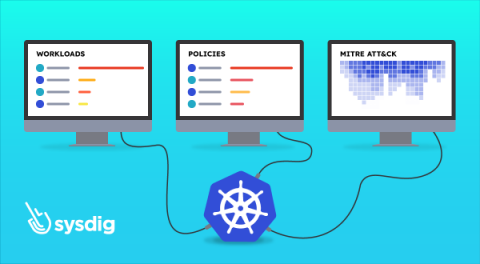
Respond Instantly to Kubernetes Threats with Sysdig Live

Discover how Sysdig Secure’s new “Kubernetes Live” informs of your Kubernetes security posture at a glance. Investigating a security incident may be a tennis match. Sometimes, you find yourself jumping from one window to another: one place for runtime events, another one for vulnerabilities, another one for logs. Gathering and correlating all the information available can be a time consuming task, but it’s the only way of having a clear view of what is going on.

Verizon: Email Reigns Supreme as Initial Attack Vector for Ransomware Attacks

My analysis of this year’s newly-released Verizon Data Breach Investigations Report begins with ransomware findings that point back to users as a big problem. If you only read one report each year to give you an idea of what’s going on with cyber attacks, it’s Verizon’s Data Breach Investigations Report (DBIR). Each year, analysts sort through tens of thousands of data breach incidents (some successful, some not) and identify the attack patterns.

Device Authority's Certificate Lifecycle Management Platform

In today’s digital landscape, where security breaches and data vulnerabilities are rampant, organizations must be equipped with robust measures to protect their valuable assets. One critical aspect of cybersecurity is managing certificates effectively throughout their lifecycle. But what exactly is Certificate Lifecycle Management? And how can it benefit your business?

Who is Mend.io

Mend.io (formerly WhiteSource) is the leader in application security. Mend uniquely removes the burden of application security, allowing development teams to deliver quality, secure code, faster. With a proven track record of successfully meeting complex and large-scale application security needs, the world’s most demanding software developers rely on Mend. The company has more than 1,000 customers, including 25 percent of the Fortune 100, and manages Renovate, the open source automated dependency update project.

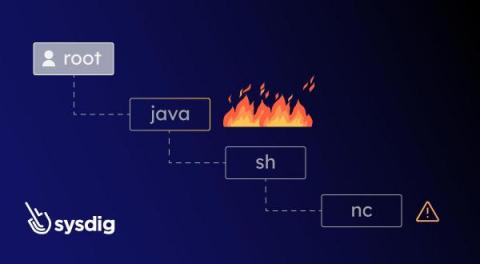
Sysdig Enriched Process Trees, an Innovative Approach to Threat Detection

Discover how Sysdig Secure’s new Process Tree feature improves threat investigation. Imagine you’re investigating a security related detection, the investigation was triggered by the execution of stat/etc/shadow in one of your containers. Is this a sign of a legitimate activity, such as a developer debugging an app, or a sign that your container has been compromised? It depends on the context.