Tanium XEM and ROI: A Powerful Duo for Government Cybersecurity
How Forrester Consulting's insights helped Tanium develop an analysis tool that can shed light into the economic impact of XEM for state and local government.

How Forrester Consulting's insights helped Tanium develop an analysis tool that can shed light into the economic impact of XEM for state and local government.
Cybercriminals can't ascertain your phone password just from a Wi-Fi signal, but they can come close according to a method described in a recent research paper. Researchers have demonstrated a method that uses Wi-Fi signals to infer numerical passwords, and the mechanics behind it are nothing short of intriguing. Side-channel attacks often remind me of James Bond-like espionage. So does a research paper that is to appear at ACM CCS later this year.
Open source software (OSS) has driven technological growth for decades due to its collaborative nature and ability to share information rapidly. However, major OSS security vulnerabilities like Log4j, Heartbleed, Shellshock and others have raised concerns about the security and sustainability of similar projects. At the same time, major open source-based companies have changed their OSS licenses, like MongoDB, Elastic (formerly ElasticSearch), Confluent, Redis Labs and most recently, HashiCorp.
In this blog post I will be discussing how Egress Gateways can help in securing traffic by means of policy routing. If you are not familiar with Egress Gateways, take a look at our blog post, Using Calico egress gateway and access controls to secure traffic.
Over 56% of organizations globally use Microsoft Azure for their cloud services owing to its convenience, cost-effectiveness, and scalability. It is vital to secure your Azure environment against the backdrop of an ever-evolving threat landscape. Otherwise, your database and digital assets can leak sensitive data. And one way to do it is through Azure security audits.
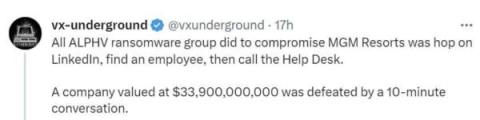
As the aftermath unfolds, the details around the recent attack on MGM Resorts, providing crucial insight into the attacks impact, who’s responsible, and how it started. On September 11, Las Vegas-based MGM Resorts International reported a cybersecurity “issue” affecting many of the company’s systems.
In the first installment of this three-part series based on our recent white paper, The Skeptic’s Guide to Buying Security Tools, we outlined an evidence-based approach to helping your organization justify a new security tool purchase. This included identifying where security gaps exist, if those gaps could be filled by existing tools, and—if not—how to evaluate potential tools that could help.
Four days later, $52 million in lost revenues and counting, a cyber attack on MGM Resorts International, a $14 billion Las Vegas gaming empire with Hollywood-famous hotel spreads like the Bellagio, Cosmopolitan, Excalibur, Luxor, and the MGM Grand itself, had the house brought down by a perfect example of vishing…a 10-minute phone call. Gamblers could not gamble. Guests could not access rooms. Lights went out. Panic set in.