Demo Tuesday
Mike’s taking the show on the road! Watch how the Blast Radius feature can localize a compromised host in seconds, even while on vacation, with Forward Enterprise. Live from Forward Networks HQ in sunny Santa Clara, California.

The best part of our job is the time we spend talking to Cloudflare customers. We always learn something new and interesting about their IT and security challenges. In recent years, something about those conversations has changed. More and more, the biggest challenge customers tell us about isn’t something that’s easy to define. And it’s definitely not something you can address with an individual product or feature.
In the modern software ecosystem, containerization has become a popular method for packaging and deploying applications. Alongside this growing trend, ensuring the security of software supply chains has become a critical concern for businesses of all sizes. Implementing best practices, such as signing and verifying images to mitigate man-in-the-middle (MITM) attacks and validating their authenticity and freshness, play a pivotal role in safeguarding the integrity of the software supply chain.
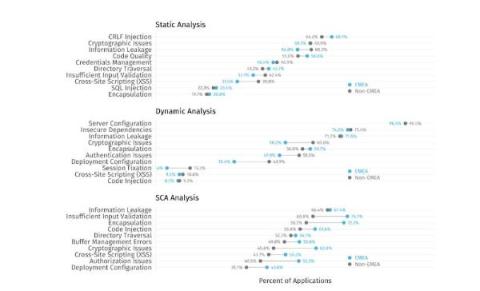
New software security data demonstrates that Software Composition Analysis (SCA) will help bolster the safety and integrity of open-source software usage for organizations in the Europe, Middle East, and Africa (EMEA) region in particular. The EU Cyber Resilience Act makes this research especially crucial and timely. Let’s dive in and look at recommendations for EMEA teams wanting to secure cloud-native development.
In our increasingly interconnected world, wireless networks have become the lifeblood of modern communication and productivity. However, this convenience comes with a price – the heightened risk of wireless attacks. In this in-depth blog, we will delve into the technical intricacies of safeguarding your network against wireless threats. Armed with this knowledge, you can confidently defend your wireless infrastructure against potential attackers.
Deepfakes have emerged as a serious concern in the digital landscape, presenting a significant threat to truth and trust. While it can be fun to swap your face with the Mona Lisa, there are some significant concerns around how these can be used to deceive us. Let’s take a look at some of the methods used, and ways to spot red flags.
This is a follow up discussion of some advanced use case scenarios for Egress Gateways. In a previous blog post, Policy-based routing with Egress Gateways, I explained how to achieve connectivity to multiple destinations using policies based on the destination of the traffic. One of the use cases described was the ability of connecting to different services based on the destination, so we can use a different source IP that can be included in an allowlist for such services.
Third-party cyber risk is now one of the biggest threats today, according to many CISOs. Security leaders point to the fact that many of the recent major breaches have been a result of a single software supply chain vulnerability: SolarWinds, Log4j, and MOVEit, just to name a few.