


Ethical Phishing: Testing Your Employees
The Rationale Behind Ethical Phishing Simulation Phishing attacks continue to be a primary vector for cybercriminals seeking unauthorized access to a company’s systems and data. These attacks are becoming increasingly sophisticated, making it crucial for organizations to educate their workforce about the dangers they pose. Ethical phishing tests are designed to mimic real-world phishing scenarios.

Holistic AppSec and Software Supply Chain Security
AppSec and software supply chain security require more than a loose collection of tools and a vulnerability remediation process. A holistic approach covers risk assessment, a secure software development life cycle, software composition analysis (SCA), SBOMs, static and dynamic application security testing (SAST/DAST), workflow automation, automated remediation, runtime protections, compliance reporting and more. Successful implementation of this holistic approach enables companies to shrink their overall attack surface and reduce technical and security debt.
What are AI Phishing Attacks?
What are AI Phishing Attacks? AI phishing attacks, also known as AI-powered phishing or AI-driven phishing, are sophisticated cyberattacks that leverage artificial intelligence and machine learning algorithms to craft and execute highly convincing phishing attempts. These attacks are designed to deceive individuals or employees into divulging sensitive information, such as login credentials, financial details, or personal data. How Do AI Phishing Attacks Work?

Demo Tuesday
Mike’s taking the show on the road! Watch how the Blast Radius feature can localize a compromised host in seconds, even while on vacation, with Forward Enterprise. Live from Forward Networks HQ in sunny Santa Clara, California.

swampUP 2023: Shielding the Foundation: Security Across Your SSC
Developers are now the target of the attacker, with binaries available publicly. While it's unlikely that the concept of security point solutions will completely disappear, it’s clear that the market is demanding a consolidated, comprehensive approach to pipeline security across the attack surface. With the increasing complexity of software supply chains, security and governance are becoming critical on developer’s machines, at the C-level and in boardrooms.
Fortify data security with FIPS-compliant OpManager
In an era where data breaches and cyberthreats are a constant concern, ensuring the security of your network monitoring systems is paramount. The Federal Information Processing Standards (FIPS) compliance standard serves as a robust benchmark for data security. In this comprehensive blog, we’ll explore the importance of FIPS compliance and delve into how OpManager, leading network management software, adheres to these standards to bolster security for its users.
BlueVoyant Supply Chain Defense
BlueVoyant Supply Chain Defense is a fully managed solution that rapidly identifies and resolves critical cybersecurity issues in your third-party ecosystem.
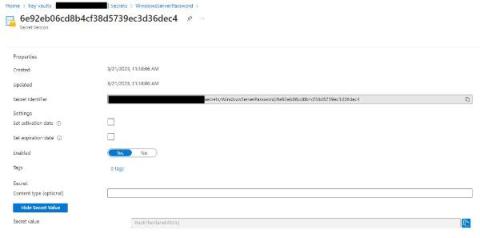
Secrets Management Best Practices: Secure Cloud-native Development Series
Build secure cloud-native applications by avoiding the top five security pitfalls we lay out in our Secure Cloud-native Development Series. This blog is the fifth and final part of the series, and it will teach you to handle credentials and secrets management best practices for securing cloud-native applications. Every organization has their way of managing credentials. In the past, with legacy application architectures, this was a bit more manual and arduous.
BlueVoyant Managed Detection & Response
The attack surface is continually changing. BlueVoyant MDR evolves with it.