Key considerations when choosing a business ISP

A Business Internet Service Provider (ISP) is a company that offers internet access and related services to businesses. Unlike residential ISPs, business ISPs are tailored to meet the higher demands and unique needs of businesses, such as greater reliability, faster speeds, dedicated support, and enhanced security. The choice of an ISP can significantly impact a company's operational efficiency, communication, and overall success.


Enhancing Patient Experience: How Virtual Reality Is Transforming Dental Visits

Welcome to the future of dental care where virtual reality (VR) is revolutionizing the patient experience. In this article, we delve into the transformative impact of VR technology on dental visits, exploring its benefits and implications for both patients and practitioners.

Five worthy reads: Navigating the landscape of US IT security laws in the government sector

In an era defined by unprecedented digitalization, the security of information and data holds paramount importance, especially within the government sector. As technology evolves, so do the laws and regulations governing IT security. Navigating this intricate terrain involves a comprehensive understanding of the diverse array of laws and regulations governing IT security.
Featured Post

Leveraging Threat Intelligence for Regulatory Compliance

The US Government recently announced that state-sponsored Chinese cyber group Volt Typhoon has compromised multiple critical infrastructure organisations' IT networks in the US and is preparing "disruptive or destructive cyber attacks" against communications, energy, transport, water and waste water systems. The announcement, which was supported by national cybersecurity agencies in Australia, Canada, UK, and New Zealand, is a sobering reminder that modern life relies on digital networks. From healthcare, banking, and socialising, to energy, water, local and national government - everything has a digital aspect.

In-House vs Outsourced Third-Party Risk Management

Today’s cybersecurity landscape is teeming with third-party threats: supply chain risks, regulatory compliance requirements, third-party security flaws, malicious insiders, and more. Whether your organization’s risk appetite craves conservative or aggressive third-party relationships, these risks make third-party risk management (TPRM) necessary.

State Government Organization Network Breach: SafeBreach Coverage for US-CERT Alert (AA24-046A)

On February 15th, the Cybersecurity and Infrastructure Security Agency (CISA) and the Multi-State Information Sharing & Analysis Center (MS-ISAC) issued an advisory highlighting the results of their incident response investigation into a state government organization’s network whose sensitive data including host/user details and other pertinent metadata were posted to the dark web.

TPRM & FINRA Compliance: Regulatory Notice 21-29

The United States Congress first authorized the Financial Industry Regulatory Authority (FINRA) to protect American investors and oversee the broker-dealer industry in 2007. FINRA is an independent regulatory organization that upholds its obligation and ensures a fair market by establishing rules to regulate business activities and improve the security of member firms and other market participants. With few exceptions, most broker-dealer firms must register with FINRA.

Strengthening small utilities: The power of public-private partnership

In the wake of recent cyber attacks against US water utilities, the vulnerability of local entities dependent on operational technology (OT) has been starkly highlighted. This danger was further emphasized last week when Congress held a hearing titled Securing Operational Technology: A Deep Dive into the Water Sector. Witnesses at the hearing painted a stark picture of the significant cybersecurity risks facing small utility companies today.

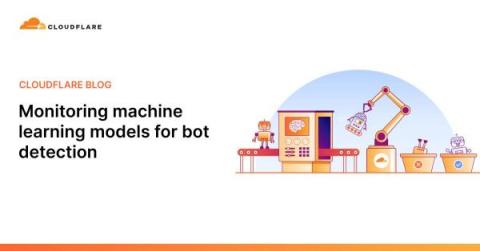
Monitoring machine learning models for bot detection

Cloudflare’s Bot Management is used by organizations around the world to proactively detect and mitigate automated bot traffic. To do this, Cloudflare leverages machine learning models that help predict whether a particular HTTP request is coming from a bot or not, and further distinguishes between benign and malicious bots. Cloudflare serves over 55 million HTTP requests per second — so our machine learning models need to run at Cloudflare scale.